The 80/20 Closet
What You Actually Wear vs What You Store
Most people wear 20% of their clothes 80% of the time.
The rest? Stored versions of who you think you are.
Strategic reframe Not a cleaning project
This isn’t about organizing hangers. It’s about spotting the gap between:
Your real self
What you reach for when nobody’s grading you.
Your aspirational self
Who you’re “about to become”… any day now.
Your past self
Proof you were that person once (and might be again).
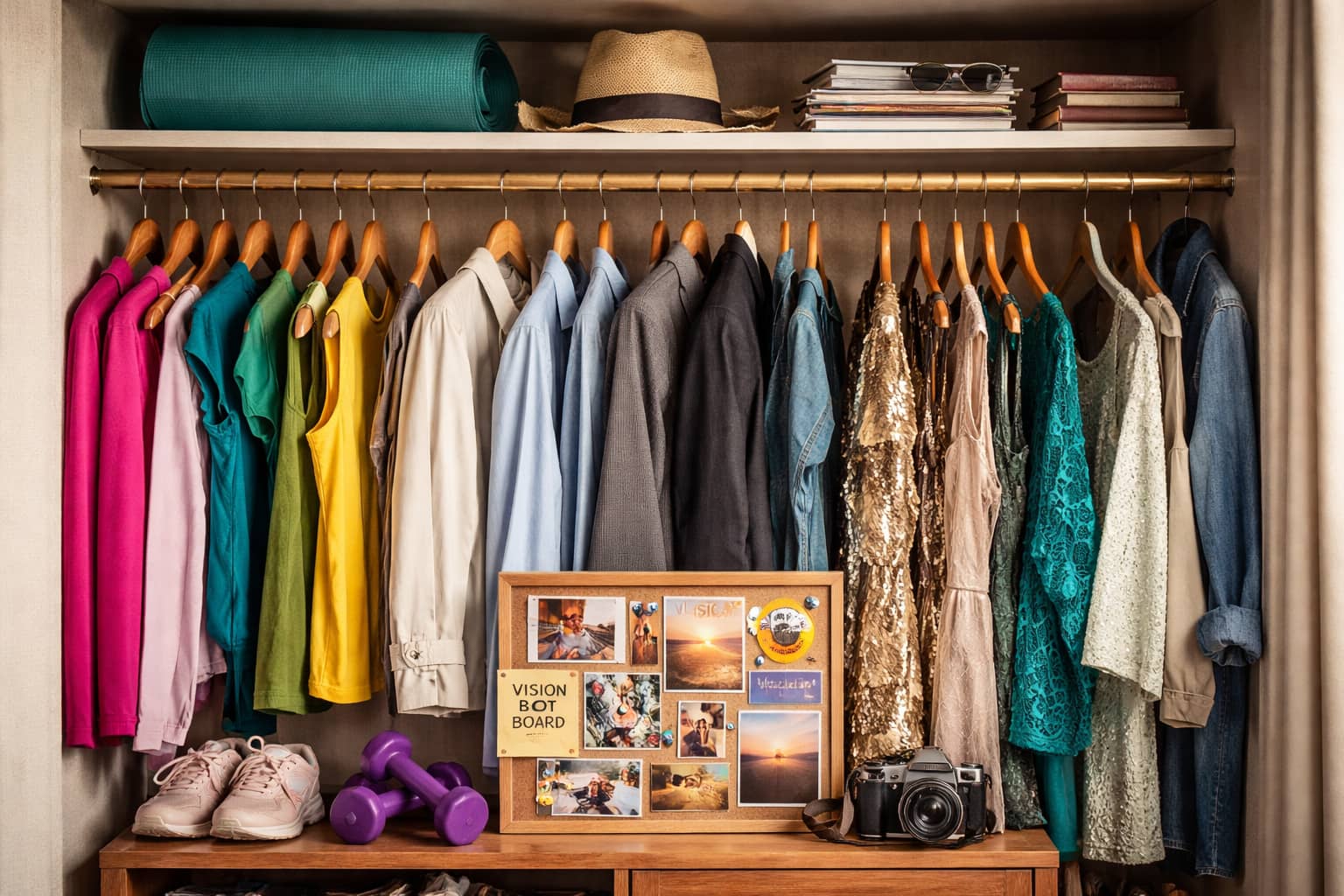
1) The 80/20 Reality Snapshot
Instant self-audit: your brain starts counting
2) The 5 Closet Archetypes
Identity shareability: “This is me.”
The Fantasy Self Wardrobe
- Six blazers for future promotions
- Gym sets for the “new routine”
- Dressy items for events that never happen
Psychology Future-self projection bias
Share trigger “This is me.”
The Guilt Rack
- Expensive purchases rarely worn
- Gifts you don’t love
- “I should wear this more” items
Psychology Sunk cost fallacy + obligation bias
Emotional hit “Why do I keep this?”
The Past-Self Archive
- Pre-baby jeans
- College-era clothes
- Old career “uniforms”
Psychology Identity anchoring
Comment bait People have stories here.
The Occasion Illusion
- Formalwear worn once every 18 months
- Niche seasonal pieces
- “Emergency” outfits for rare invites
Psychology Overestimating rare events
Pattern Storage for hypotheticals
The Comfort Core (The Actual 20%)
- Neutral staples
- Repeated outfits
- Go-to shoes
Psychology Cognitive efficiency
Reality Less thinking. More living.
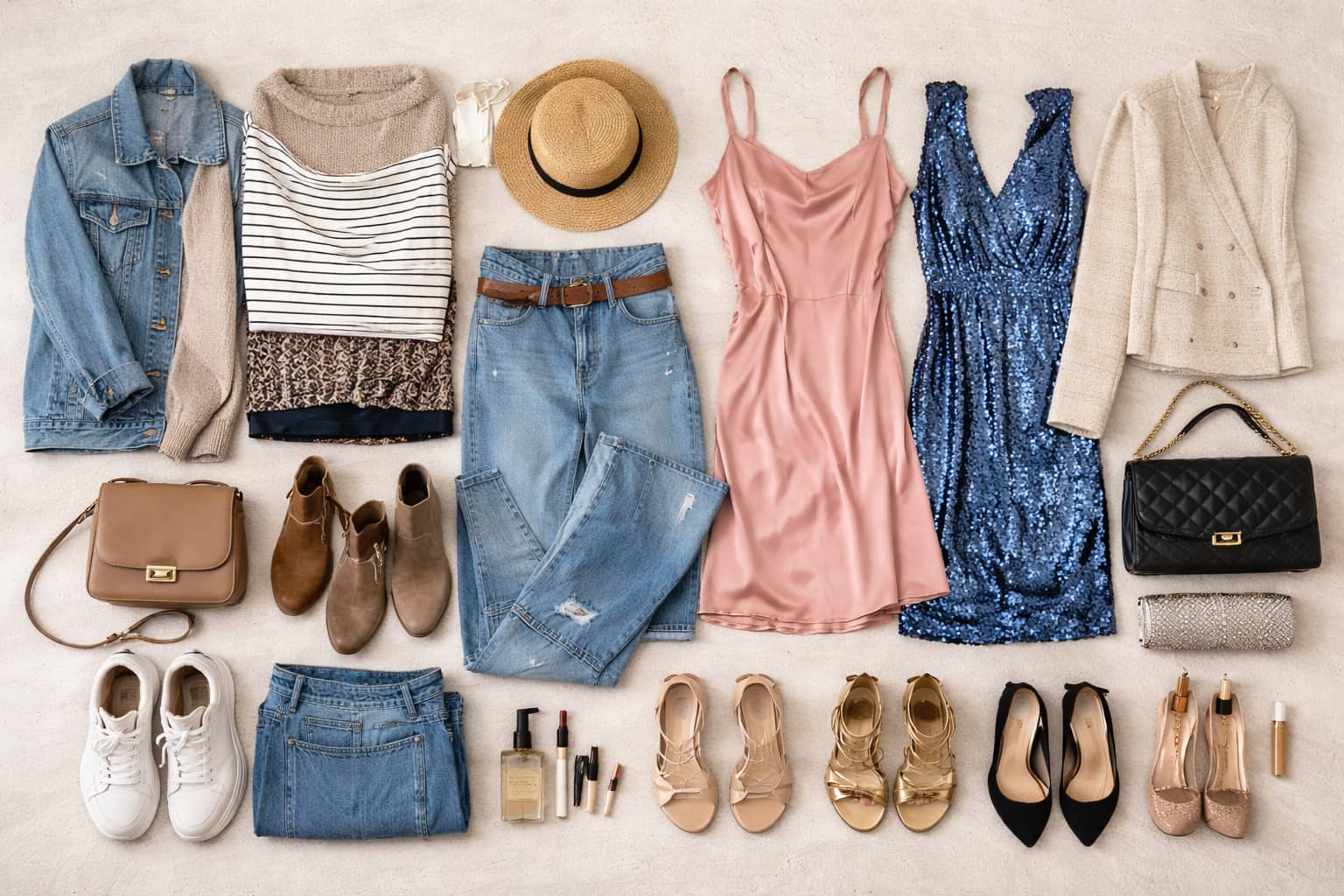
3) Cost Per Wear Heat Map
Emotional → financial (and suddenly: shareable)
| Item | Cost | Wears | Cost / Wear |
|---|---|---|---|
| Everyday jeans | $80 | 120 | $0.67 |
| White sneakers | $95 | 150 | $0.63 |
| Work blazer | $140 | 18 | $7.78 |
| Wedding guest dress | $220 | 2 | $110 |
| Designer heels | $350 | 3 | $116 |
4) Closet Density vs Outfit Satisfaction
Minimalism reframed as performance optimization
The Curve
Too few items → frustration.
Too many items → decision fatigue.
The goal is a curated rotation: enough options, not enough noise.
Too many items → decision fatigue.
The goal is a curated rotation: enough options, not enough noise.
5) The 30-Day Wear Audit Challenge
Simple. Visual. Actionable.
The 30-day method
1
Turn hangers backward
Start with everything facing the “wrong” way.
2
Flip after wearing
Each time you wear something, return it facing forward.
3
Count untouched items
At day 30, anything still backward is a “stored self.”
Result Your real 20% appears
You’ll see your Comfort Core in the wild — and the categories that keep “living in storage.”