science-ish metaphor memory-trigger objects

The Emotional Half-Life of Breakup Clutter

Subtitle: How long we keep things vs. how long they actually serve us.

Emotional Half-Life

= The time it takes for an item to lose 50% of its emotional intensity.
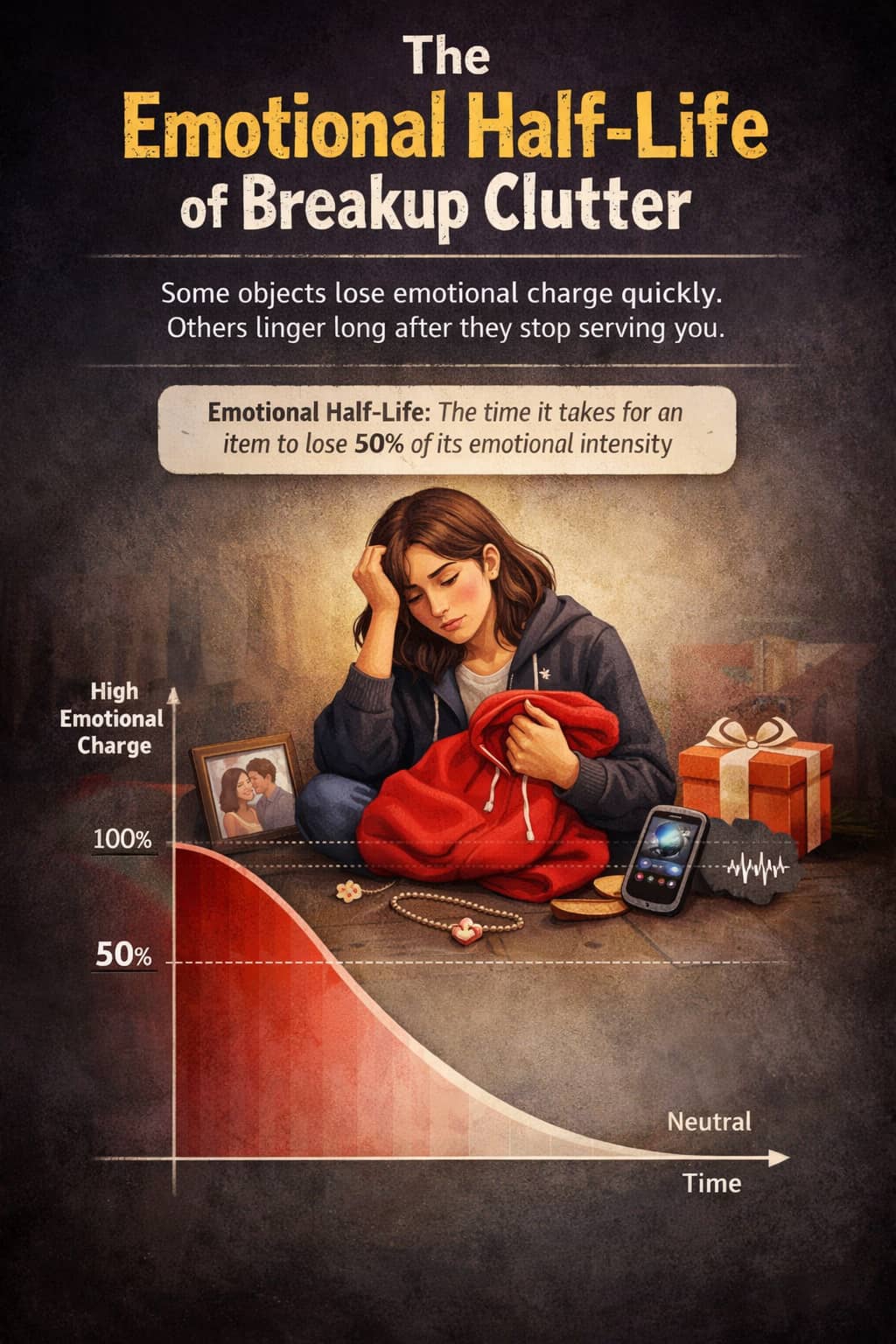
Illustration of a box of breakup-related items with a gentle 'hazard label' vibe, like a playful science metaphor.
Visual anchor: Breakup clutter as “radioactive” memory-triggers (but with cartoon ink, not doom).

Some objects cool off fast. Others linger.
the curve is the clue
emotional intensity time 50% The first drop is the loudest Most items fade faster than we expect. Keeping them isn’t always “proof.”
intense neutral Half-life = the “50% line”
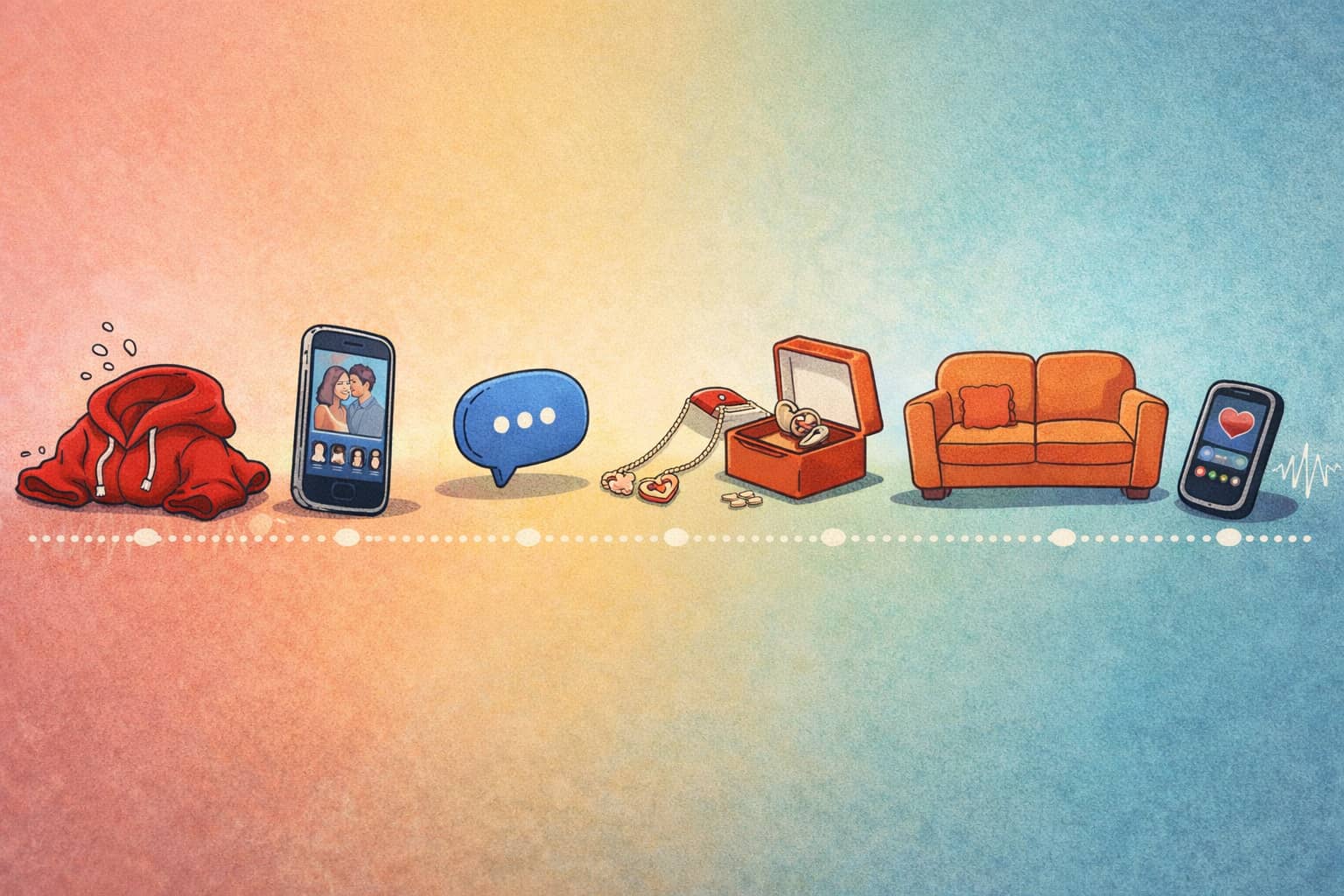
Illustration of breakup objects—hoodie, phone photos, message bubble, jewelry box, sofa, and voice note waveform—arranged like a playful diagram.
Quick read: Different objects carry different “trigger density.” The same box can hold a blanket… or a time machine.

The Timeline: What we keep vs. what still hits

core shareable asset
1 week1 month3 months6 months1 year3+ years

Ex’s Hoodie

People keep it: 4–12 months
Emotional half-life: ~3 months

Why: scent memory + physical comfort.

Keep time
Half-life
Declutter Window

After the scent fades, attachment drops sharply.

Photos on Your Phone

People keep it: Indefinitely
Emotional half-life: 6–18 months

Why: narrative attachment, identity preservation.

Keep time
Half-life
Declutter Window

Archive at 3 months, reassess at 1 year.

Text Message Threads

People keep it: 1–3 years
Emotional half-life: 2–4 months

Why: re-reading for validation or closure.

Keep time
Half-life
Declutter Window

Screenshot key closure moments, delete the rest.

Jewelry / Expensive Gifts

People keep it: 3+ years
Emotional half-life: 8–12 months

Why: financial justification overrides emotion.

Keep time
Half-life
Declutter Window

Repurpose or resell after emotional neutrality.

Shared Furniture

People keep it: 2–5 years
Emotional half-life: ~6 months

Why: practicality delays emotional reset.

Keep time
Half-life
Declutter Window

Rearrange or redesign space within 3 months.

Saved Voice Notes

People keep it: 1+ year
Emotional half-life: highly volatile

Why: emotional spikes; sound hits the nervous system fast.

Keep time
Half-life
Declutter Window

Highest relapse trigger—delete earlier.

Trigger Density Heat Map

screenshot-gold panel

Trigger intensity isn’t “how dramatic you are.” It’s how efficiently an object pulls your brain back into the story.

Voice notes
9
Clothing
8
Text threads
7
Photos
6
Gifts
5
Furniture
4

Don’t Declutter on Peak Emotion

3-phase rule

Phase 1: Emotional Shock

0–30 days
  • Do not purge sentimental items.
  • Reduce surprise triggers.
  • Make the room feel steady again.
Rule: store out of sight (out of mind gets a fair shot).

Phase 2: Stabilization

1–3 months
  • Archive digital clutter first.
  • Remove high-trigger objects.
  • Set “revisit dates,” not vows.
Rule: choose the next easiest win.

Phase 3: Identity Reset

3–12 months
  • Redesign your space.
  • Release neutralized objects.
  • Keep what supports the current you.
Rule: let your environment match your present.

The Big Insight

share this
The goal isn’t to erase the past.
It’s to stop letting it occupy your present space.

If an item still spikes you, it’s data—not a verdict. Use the timeline and the heat map to pick the next move with a steadier hand.

ClutterLogic.com | Check Us Out On Medium