Clutter = unresolved thinking you can trip over.
Each item that doesn’t have a clear role in your current life becomes a tiny open tab. Enough open tabs, and your brain starts buffering.
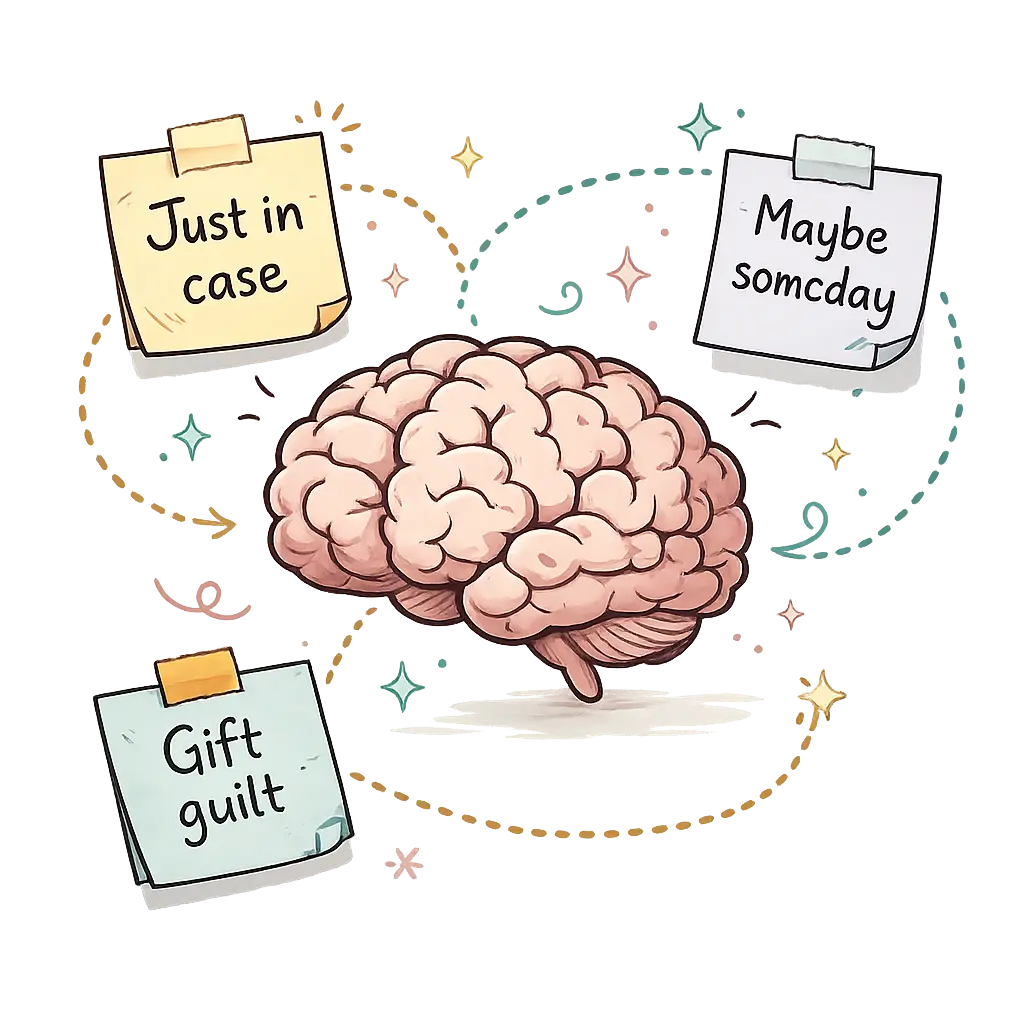
Decluttering gets easier when it becomes a decision system—not a willpower event.
Decision fatigue → piles
“Keep? Donate? Store? Fix? Sell?” is a tiny decision… until it’s 200 of them.
When energy drops, “later” becomes the default action. The object stays… and the question stays with it.
(Later is a very big shelf.)
The pile isn’t “stuff.” It’s a stack of unanswered prompts.
Storage doesn’t solve uncertainty
If the decision is still unresolved, a bin is just a nicer-looking “later.”
Translation: “I don’t know what to do with this.”
Translation: “I’m paying interest on this decision.”
Item doesn’t have a job in current life.
Visual quiet… mental tab stays open.
Next cleanup… same question, again.
The fastest decluttering isn’t “better storage.” It’s fewer undecided items entering the system.
The real trade: hypothetical comfort vs present clarity
Keep it protects a maybe
- Pros: preserves options; avoids immediate regret.
- Hidden cost: daily mental “inventory” and space tax.
- Common reason: fear of future inconvenience.
Release it buys clarity now
- Pros: reduces open tabs; makes decisions easier tomorrow.
- Hidden cost: brief discomfort (and the occasional repurchase).
- Common reason: commitment to current identity and priorities.
If an item doesn’t have a clear role right now, it’s likely serving as a placeholder for uncertainty. Decide the role—or retire the item.
Clarity is a system, not a weekend project.
Reduce the number of decisions you defer, and clutter stops “regenerating” like a sitcom villain. (A polite villain, but still.)
images/hero_brain_notes.webp
• ratio 1:1
• All other visuals are CSS/SVG