A psychology-backed map for the messy middle

The Downsizing Curve: Why It Feels Worse Before It Feels Better

Downsizing often follows a predictable emotional U-shape: the dip isn’t failure—it's the turning point.

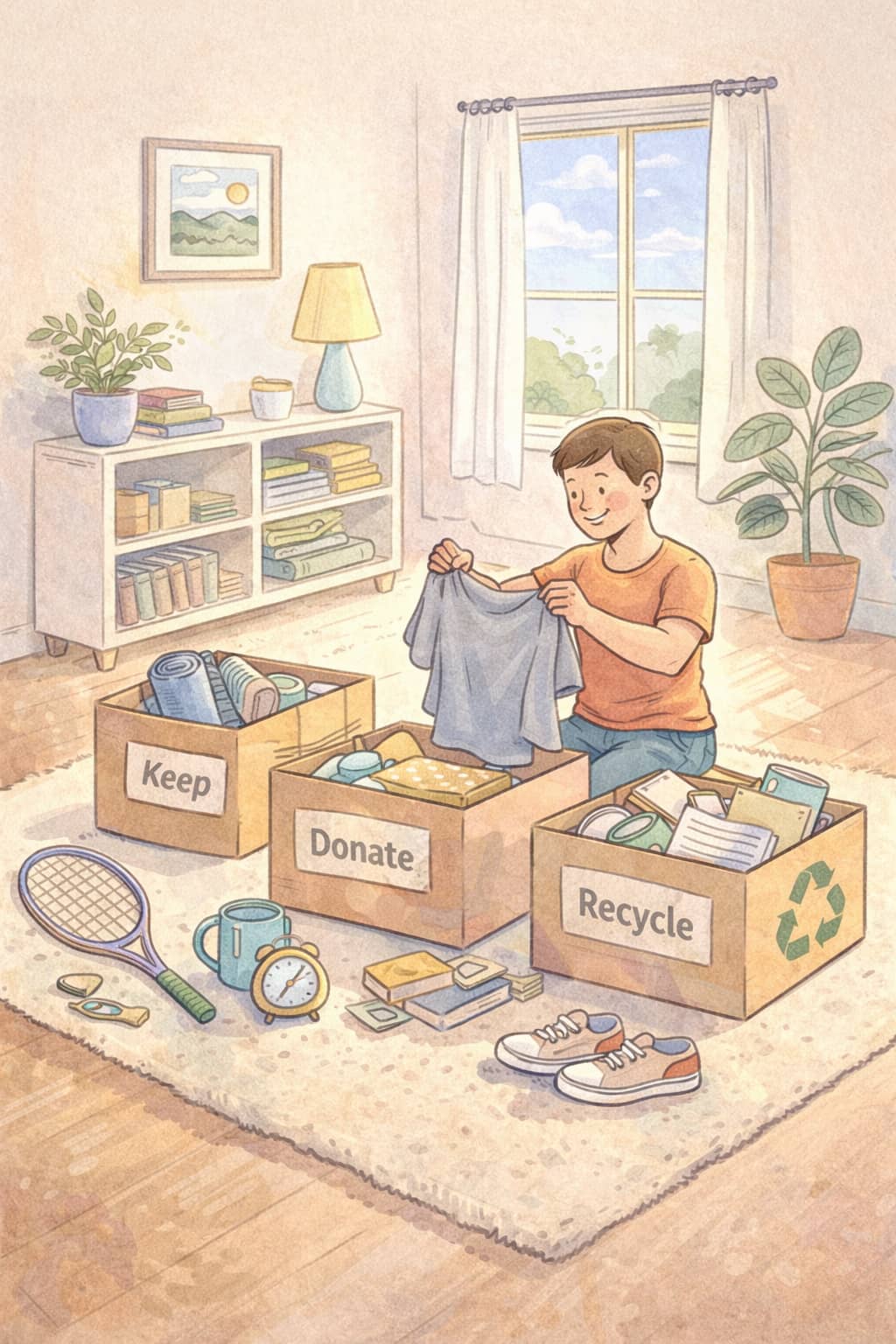
A bright, friendly illustration of a person sorting items into keep, donate, and recycle boxes in a cozy room.
Time moves forward. Your feelings wobble. The curve still climbs.
  • The dip is normal Overwhelm peaks right before momentum starts.
  • Brains hate losses Ownership makes “maybe” items feel priceless.
  • Progress is visible Small wins create energy you can reuse.

The curve, stage by stage

Time flows downward. The curve swings left (anxiety/overwhelm) before climbing right (relief/clarity).

1

Overwhelm

Slightly elevated… but wobbly.

“I don’t even know where to start.”

Psychology: Cognitive overload — too many visible decisions at once.

Micro-behavior: You bounce between piles, touching lots of items but finishing none.

Try: pick one tiny zone (one drawer, one shelf) and finish it end-to-end.

2

Resistance

The curve starts dipping.

“What if I need this later?”

Psychology: Loss aversion activates. Ownership inflates value (endowment effect).

Micro-behavior: You create a “maybe” pile that grows… and grows… and gains a personality.

Try: add a rule — “If I can replace it in 20 minutes for under $20, it goes.”

3

Guilt

The trough forms.

“This was expensive.”
“It was a gift.”

Psychology: Sunk cost + identity attachment (“this says something about me”).

Micro-behavior: You negotiate with objects: “I’ll keep it… if I become the kind of person who uses it.”

Try: keep the meaning, not the item — photo it, write the story, then release it.

4

Decision Fatigue

Lowest point (the turning point).

“I can’t make one more decision.”

Psychology: Micro-decisions drain willpower rapidly — your brain starts protecting itself.

35,000 decisions/day

A commonly cited cognitive estimate for how many choices adults juggle daily.

Micro-behavior: You freeze, doom-scroll, or “take a break” that mysteriously becomes a week.

Try: pre-decide categories (trash / donate / keep) and set a short timer: 12 minutes.

5

Micro-Momentum

The curve begins rising.

“That drawer looks better.”

Psychology: Visible progress triggers dopamine — effort starts to feel rewarding.

Micro-behavior: You seek quick wins and keep going “just one more” cycle.

Try: keep a “done list” (yes, a list of finished spots). Your brain loves receipts.

6

Control Returns

Agency replaces avoidance.

“I can do this.”

Psychology: Reduced visual noise lowers stress load; planning feels possible again.

Micro-behavior: You start sorting by systems (daily use, seasonal, storage) instead of random piles.

Try: create a “home” for essentials first. Everything else becomes easier to judge.

7

Lightness

High on the curve.

“Why didn’t I do this sooner?”

Psychology: Relief from cognitive load. Some household research links chronic clutter with higher stress hormones (cortisol) in certain groups.

Micro-behavior: You maintain by default: small resets, fewer “mystery piles,” faster cleanup.

Try: keep one “breathing space” surface empty on purpose. It becomes your calm anchor.

8

Identity Shift

Peak of the curve.

“I’m someone who lives intentionally.”

Psychology: Behavior becomes self-concept. You’re no longer “trying to declutter” — you’re choosing how you live.

Micro-behavior: You buy with fewer “just in case” impulses, and you keep only what earns its place.

A bright, uncluttered living space with warm light and plenty of open surface area.
Open space isn’t emptiness — it’s room to think.

Downsizing isn’t about stuff. It’s about moving from anxiety to agency.

Save this for the moment you hit the dip.

ClutterLogic.com | Check Us Out On Medium