Start node
“I should declutter.”
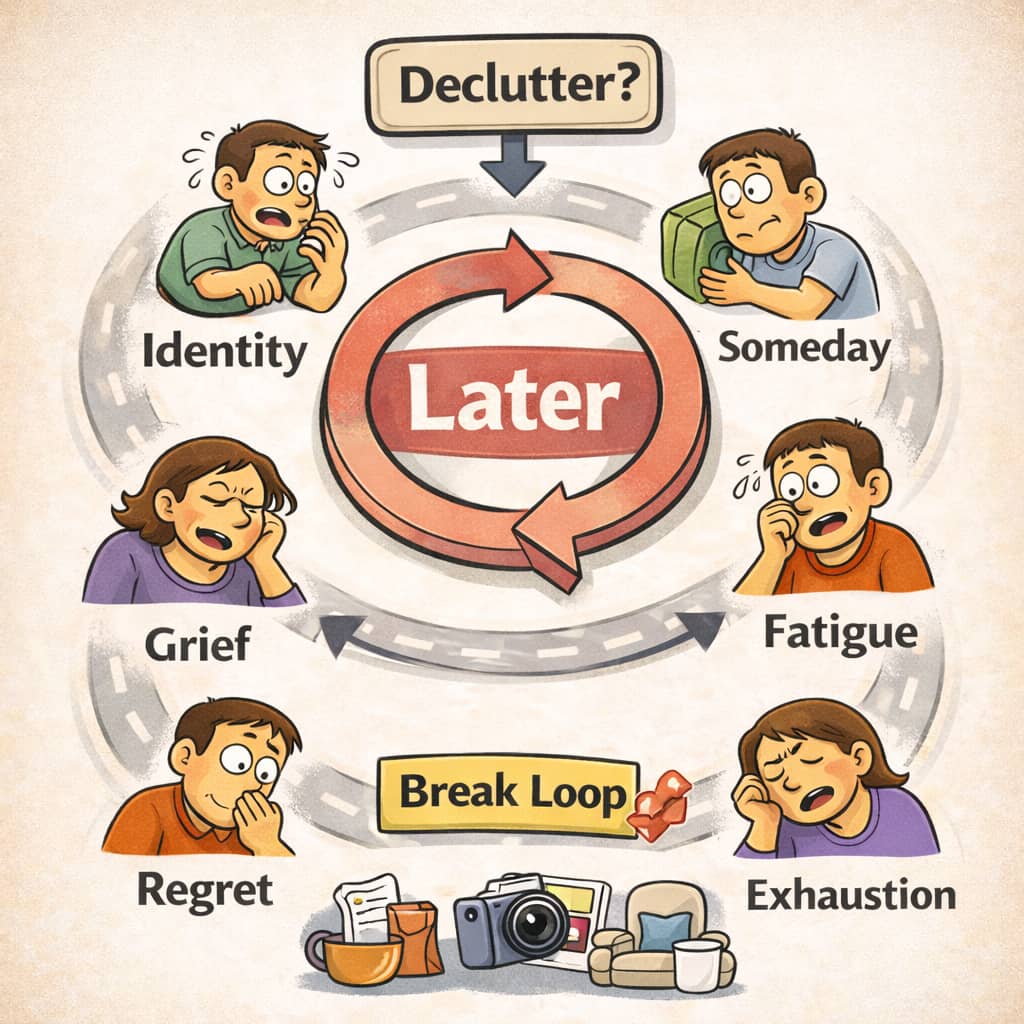
Then your brain picks a loop to keep you safe (and stationary).
Why people stall even when they “know what to do”: the emotion shows up first, the “logic” shows up later (often with snacks).
Start node
“I should declutter.”
Then your brain picks a loop to keep you safe (and stationary).
Branch point
An emotional loop kicks in.
Pick one below (or let it pick you).
If I let this go, who am I without it?
Keeping it feels safer than imagining the one future scenario.
Deciding forces a goodbye, so you postpone the feeling.
Too many tiny choices drain willpower until “later” wins.
You picture the mistake more vividly than the relief.
Your body reads overload as “not ready” — not “need a break.”
All loops circle back to
“Leave it for later.”
The pile stays put. The emotion calms down. Your brain calls that a “successful plan.”
Small, specific moves beat heroic motivation. Aim for “less loaded,” not “perfect.”

Set a tiny finish line (like 5 items). Decide: keep / donate / toss — then stop.
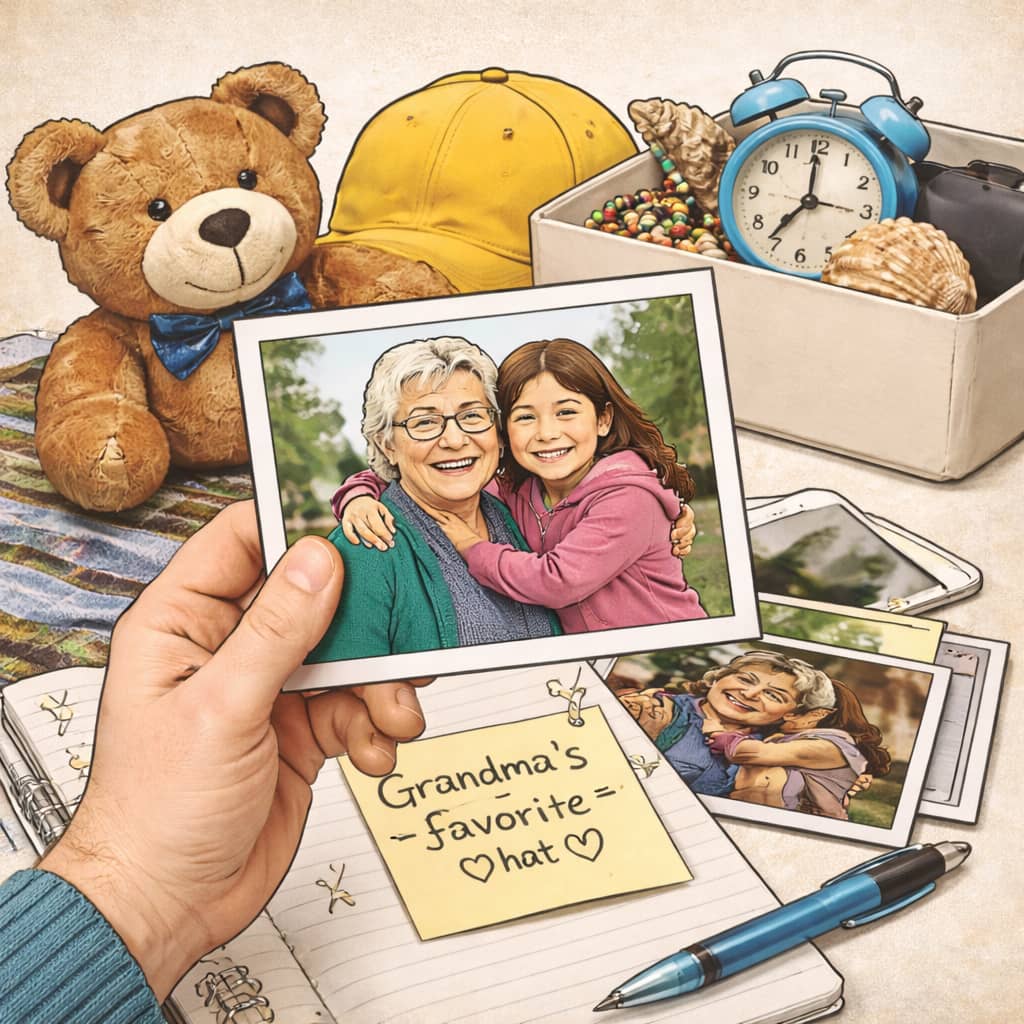
Photograph it, write one sentence, keep the meaning — not the bulk.

Decluttering can be emotional labor. Short, kind sessions beat marathon guilt-sprints.