Not about tidiness — about staying steady
Clutter slows correction

How Clutter Increases Fall Risk (Before It Affects Aesthetics)

The most dangerous clutter isn’t what looks messy. It’s what slows your body down when you need a fast step, a quick grab, or a clear line of sight.

The goal isn’t a “perfect home.” The goal is more time upright.
Fall prevention
Reaction time
Joint strain
Cognitive load
Independence longevity

Section 1 · The silent risk

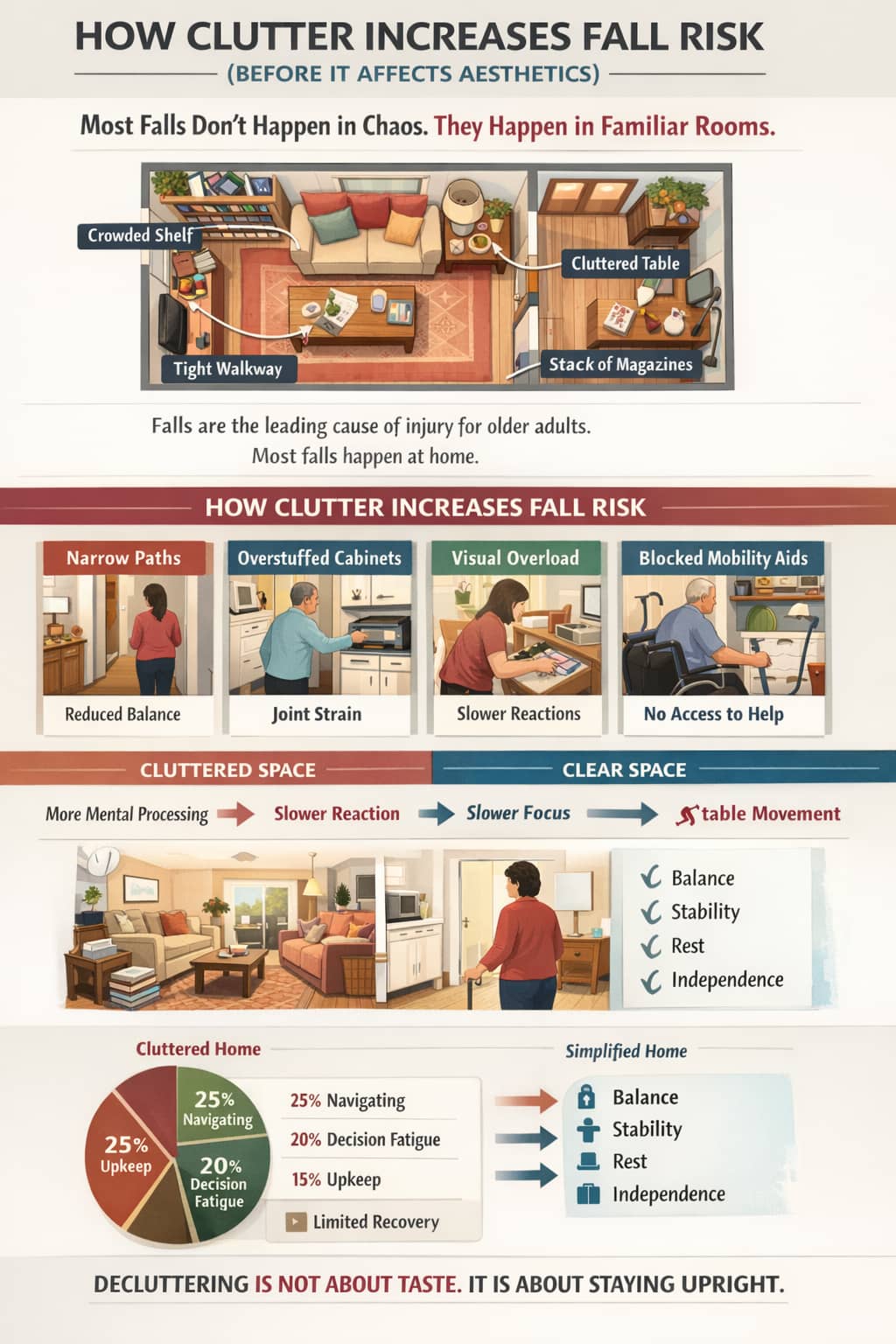
Most falls don’t happen in chaos. They happen in familiar rooms.

Familiar spaces feel “safe,” so we move on autopilot. Small obstacles matter most when we’re not expecting them.

Overhead view of a modest living room with subtle clutter and narrow paths
Familiar room + subtle clutter = hidden risk zones.
Risk zone

Narrow pathway encourages shorter steps and more side-to-side sway.

Risk zone

Overloaded surfaces create “grab points” that tip or slide when used for balance.

Risk zone

Low clutter (toe-height) is where toe catches happen… quietly.

Risk zone

Reach + twist moments (shelves, side tables) combine strain with shifting weight.

Falls are a major health risk for older adults. Public-health agencies (including the CDC) emphasize fall prevention at home.
“Home” is where risk hides. The highest-impact fixes are often small: paths, reach zones, and quick access.

Section 2 · The 4 mechanisms

Four ways clutter quietly increases fall risk

Clutter doesn’t just “get in the way.” It changes how you move, what you notice, and how fast you can correct.

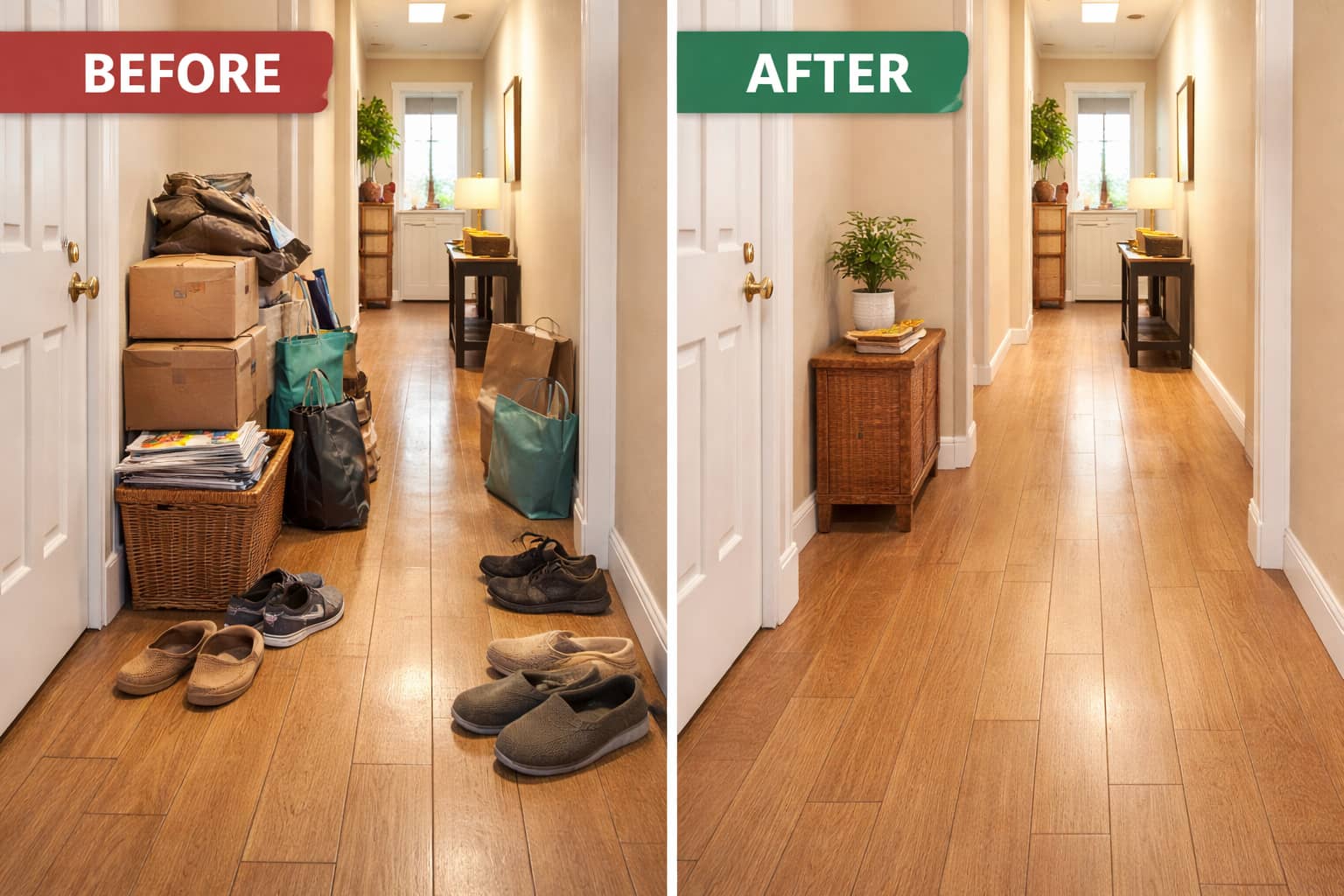
1) Narrowed Walking Paths

A few inches can change balance mechanics and foot placement.

Clear path
~36 inmore stable
Clutter squeeze
~30–32 inmore sway
Before and after hallway comparison showing narrowed vs clear walking path
Shorter steps Lateral sway Toe catches

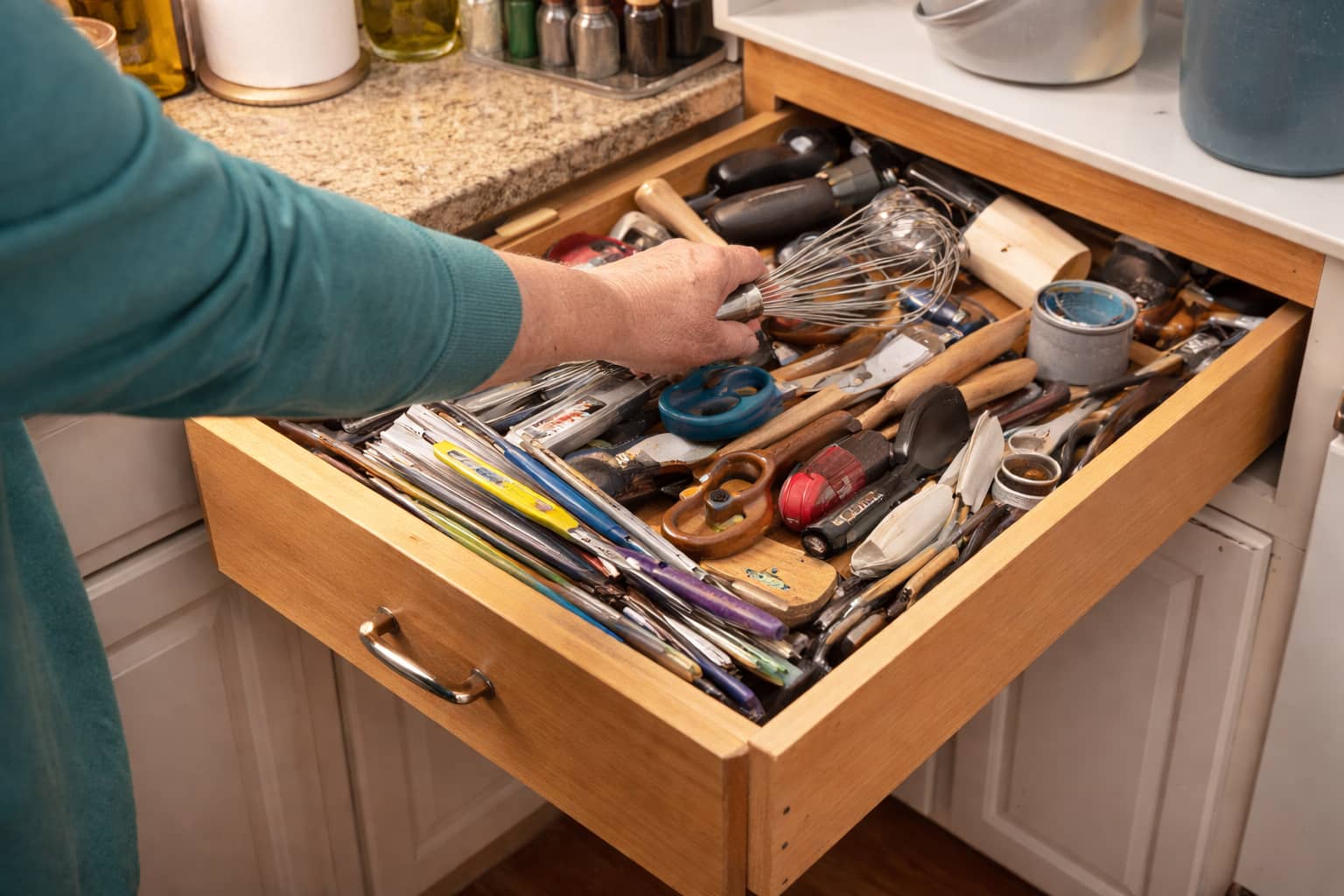
2) Overfilled Drawers & Cabinets

Reach + twist + uneven load = joint strain and balance shifts.

Person reaching into an overstuffed drawer with items shifting
Shoulder strain Weight shifts Unstable stance

When objects snag, slide, or fall… your body does a quick “save” movement. Those saves add up.

3) Visual Overload

Your brain scans peripheral objects. More objects = slower detection.

Crowded
Simplified
Slower reaction Decision fatigue Missed obstacles

More visual “stuff” competes with what matters: edges, steps, pets, cords, and your own foot placement.

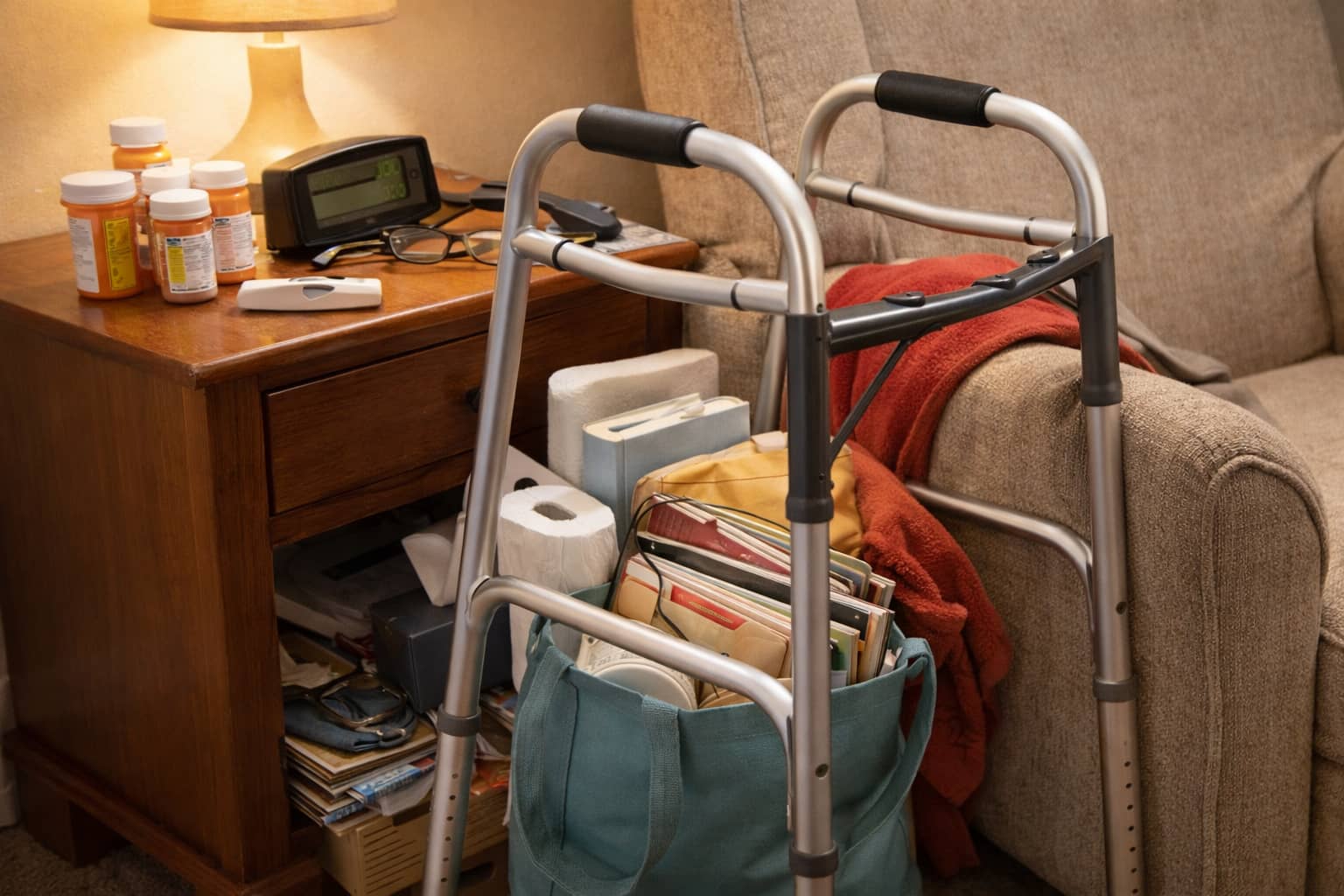
4) Hidden Mobility Barriers

Safety tools only work when they’re instantly reachable.

Walker or cane partially blocked by clutter near a chair or bed
Delayed support Night path issues Emergency access

Clear routes matter most at night: bed → bathroom → light switch → back again.

Section 3 · The viral mechanism

Clutter slows correction — and falls happen in the gap

When you trip, you don’t “think” your way out. Your body runs a fast loop: notice → process → correct. Clutter adds extra inputs and steals milliseconds.

Cluttered space

more inputs
More things in view edges, piles, cords, objects
Brain processes more what’s important vs noise
Slower corrective step shorter reach + less time
Higher fall risk the “save” arrives late

Clear space

faster loop
Fewer inputs in view clear edges + predictable path
Faster detection obstacle stands out
Bigger, timely correction stable foot placement
More stability upright wins the meeting

Section 4 · The energy tax

Clutter taxes energy — and energy is balance

A cluttered environment quietly spends your daily “budget” on navigation and micro-decisions. A simpler space reallocates that budget to steadier movement and recovery.

In a cluttered home

energy leaks
25% physical energy navigating
20% decision energy scanning
15% maintenance effort
40% left for recovery & life

Illustrative model to show the concept of “energy leakage,” not a clinical measurement.

In a simplified home

energy returns
44% balance & stability focus
26% lower navigation load
16% rest & recovery
14% social & daily living

The big win: fewer surprises → faster correction → less strain over time.

Section 5 · The reframe

Decluttering is not about taste. It is about staying upright.

Useful for caregivers, occupational therapy conversations, senior living safety checks, and “aging in place” planning. Focus on paths, reach zones, visibility, and instant access—not perfection.
Clear path = faster correction
Clear sight = faster detection
Clear access = safer support

ClutterLogic.com | Check Us Out On Medium