Psychology Systems No-Shame Diagnosis

What Your Clutter Is Actually Telling You

Your home isn’t messy. It’s communicating.

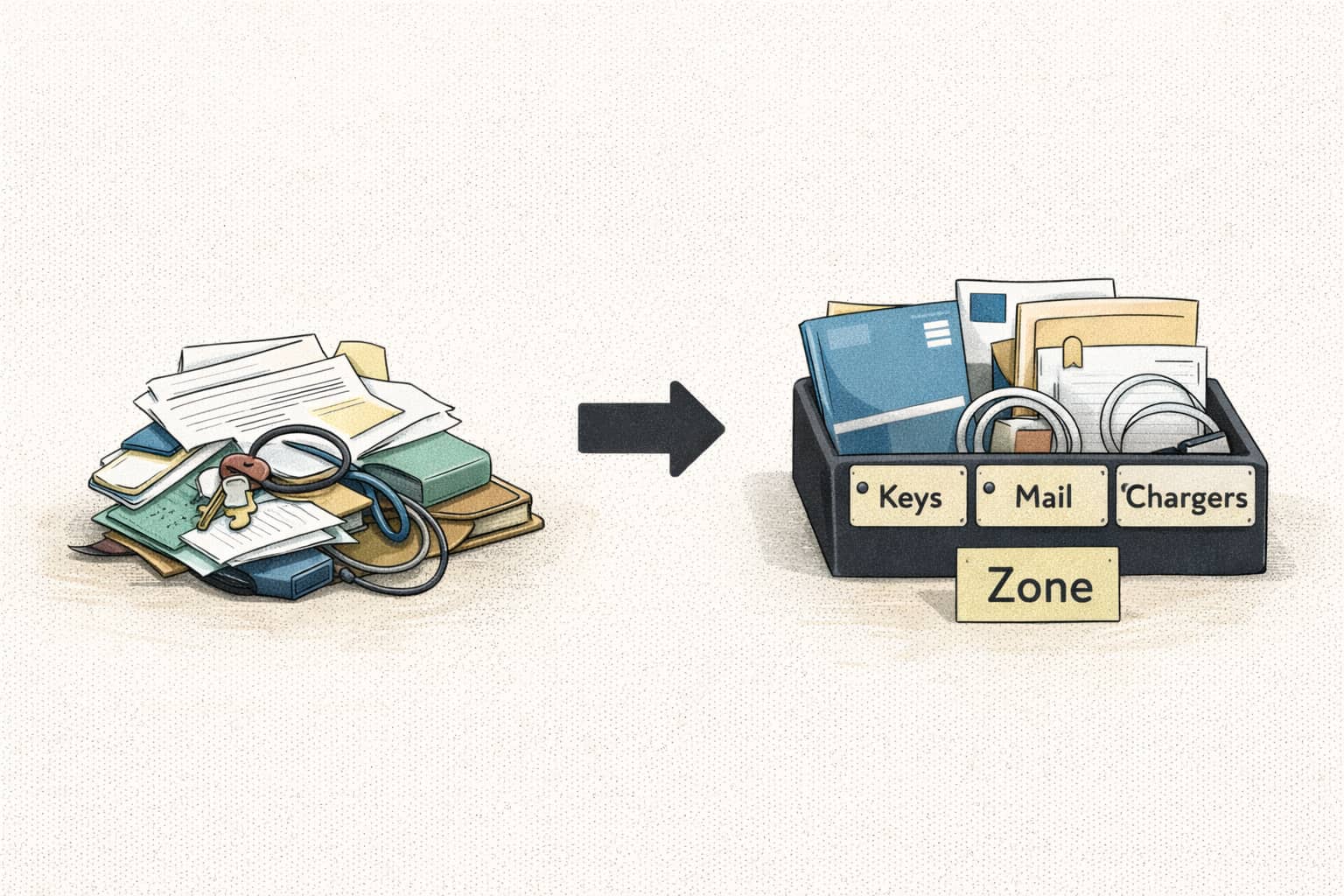
Illustration: a calm home scene with small clutter icons turning into labeled zones.
Clutter repeats where the system is unclear. Patterns are messages.

1) The Friction Map

If something keeps happening, it’s not “laziness.” It’s a design flaw.

1) Recurring pile in the same spot

Clutter Pattern

Same corner. Same chair. Same “temporary” stack.
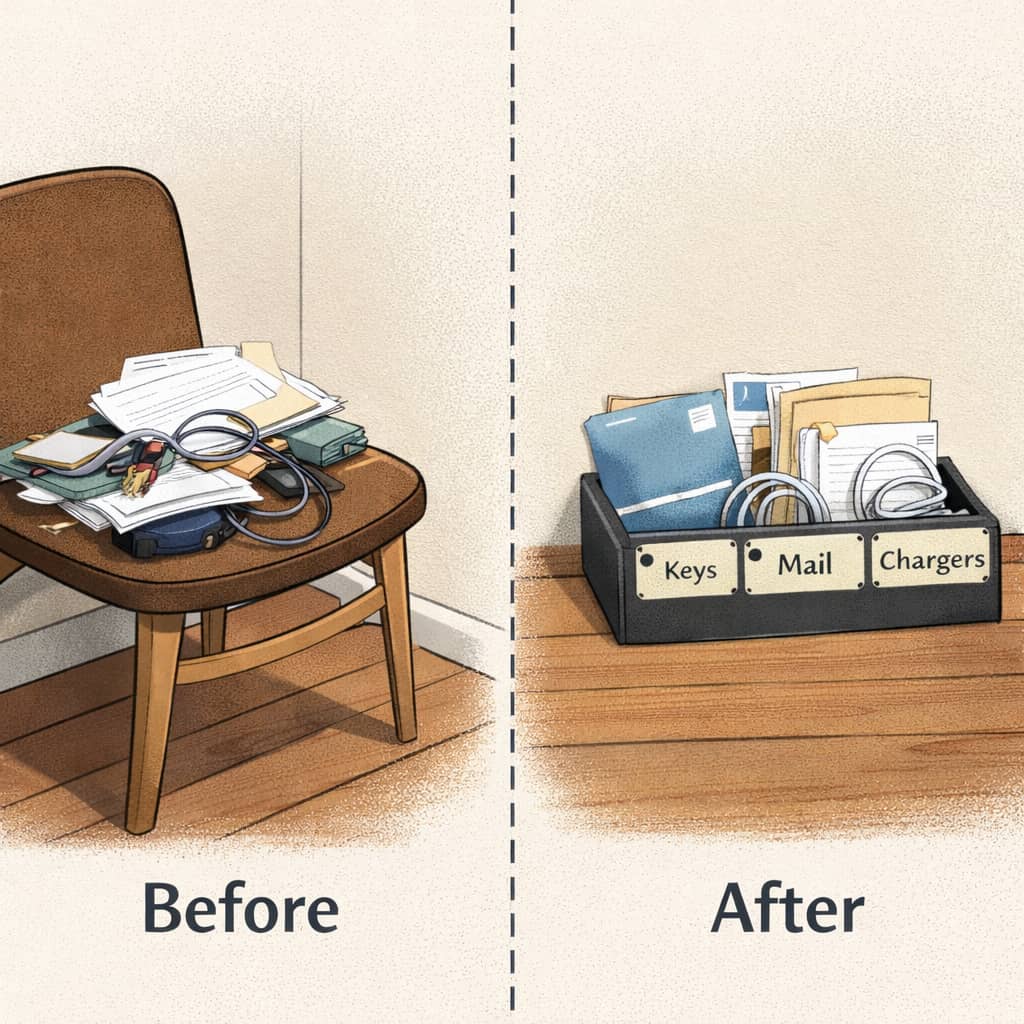
Before/after: a recurring pile becomes a defined zone with a boundary.
That spot is trying to become a zone.

Hidden signal: Missing rule

Signal
Why it happens

The space has no defined boundary, so “temporary” becomes permanent.

Micro-insight: If items gather repeatedly, that location is asking for a simple label + boundary.
2) Covered surfaces (counters, tables, chairs)

Clutter Pattern

Surfaces become “decision parking lots.”

unresolved choices reduced stimulus

Hidden signal: Decision fatigue

Signal
Why it happens

Surfaces are default landing zones for unresolved decisions (mail, returns, “I’ll handle later”).

Pull quote: “Surfaces broadcast the state of your nervous system.”

3) Overflowing closet

Clutter Pattern

Hangers packed. Shelves bowed. Doors negotiating.

Hidden signal: Capacity denial

Signal
Why it happens

Storage expands instead of decisions being made.

Micro-insight: When space is elastic, clutter grows to fill it.

4) Backup items / duplicates

Clutter Pattern

Three scissors. Six chargers. Five “just in case” bottles.

Hidden signal: Fear of inconvenience

Signal
Why it happens

Low-probability scenarios crowd out high-frequency peace.

“One version is information. Five versions are noise.”

5) Organized… but still overwhelmed

Clutter Pattern

Bins everywhere. Labels everywhere. Calm nowhere.

Common loop

Organize → justify → preserve → permanent clutter.

Hidden signal: You organized before removing

Signal
Why it happens

You built infrastructure for excess, so the excess feels “official.”

Micro-insight: Organization can be a way to avoid the harder step—removal.

6) Emotional boxes you avoid

Clutter Pattern

The box that makes your shoulders rise when you see it.

Hidden signal: Uncontained exposure

Signal
Why it happens

You’re asking your nervous system to process too much at once.

Reframe: Delay is not avoidance. It’s sequencing.

7) Constant restarting

Clutter Pattern

Big clean. Great week. Then… back to zero.

Hidden signal: Motivation-based system

Signal
Why it happens

The system depends on mood instead of rules.

“Resets feel decisive. Rules are sustainable.”

2) Find Your Dominant Clutter Pattern

Pick the one that shows up most often. That’s your “starting lever.”

Your Pattern → your system fix
Surface clutter → fatigue
Duplicates → anxiety
Overflow storage → optionality
Recurring pile → boundary
“Someday” boxes → identity lag
Organized chaos → avoided removal
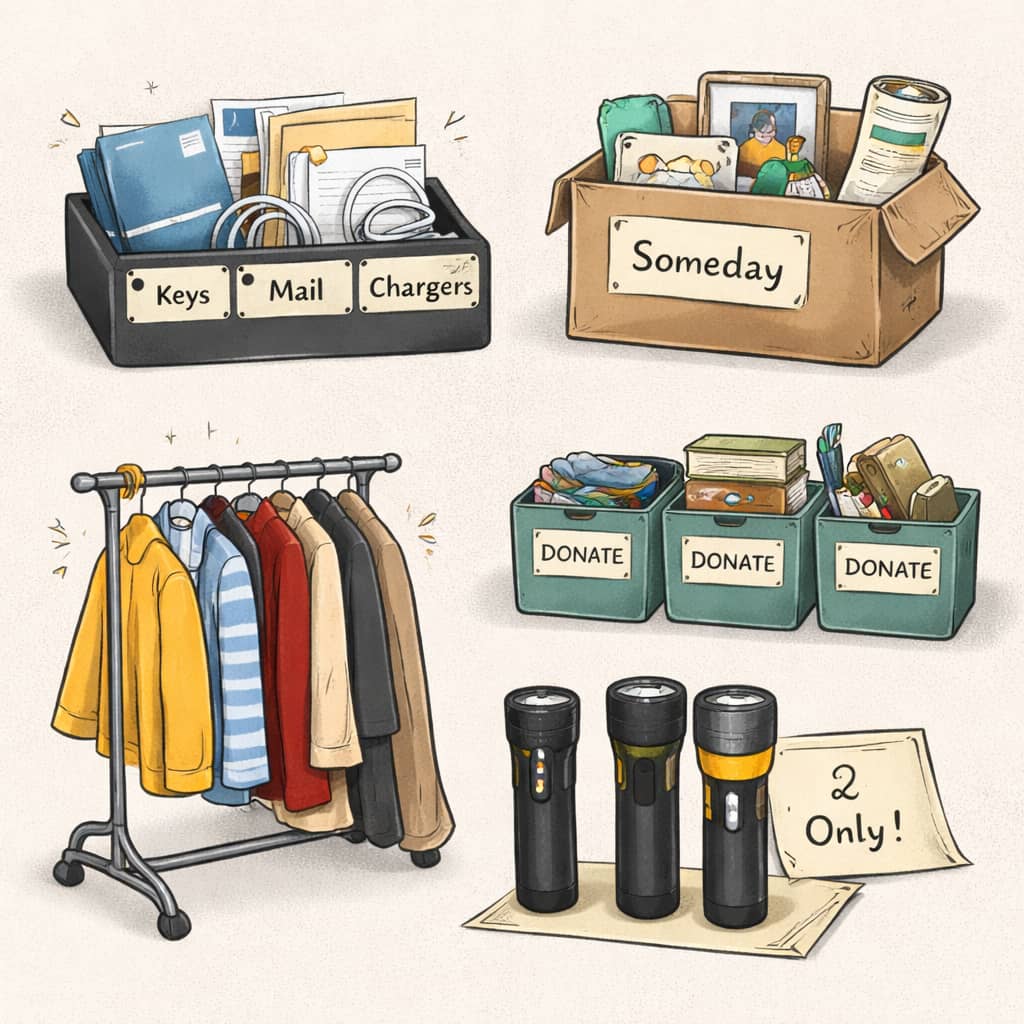
Illustration: small icons for clutter types (box, pile, hanger, duplicates) arranged neatly.
Think “pattern,” not “personality.” You can change the pattern.

How to use this

Don’t try to fix everything. Choose the loudest pattern and apply a single rule.

  • If it’s mostly surfaces → reduce decisions.
  • If it’s mostly duplicates → cap quantities.
  • If it’s mostly overflow → shrink the container.
  • If it’s mostly restarts → create a standing rule.

3) The System Correction Layer

Actionable, not preachy: small structural shifts beat heroic clean-ups.

Instead of

  • Clean more
  • Try harder
  • Wait for motivation
  • Buy more storage

Try this

  • Define one boundary
  • Enforce one rule
  • Cap one category
  • Shrink one container
Signal
Structural fix
Recurring pile (missing rule)
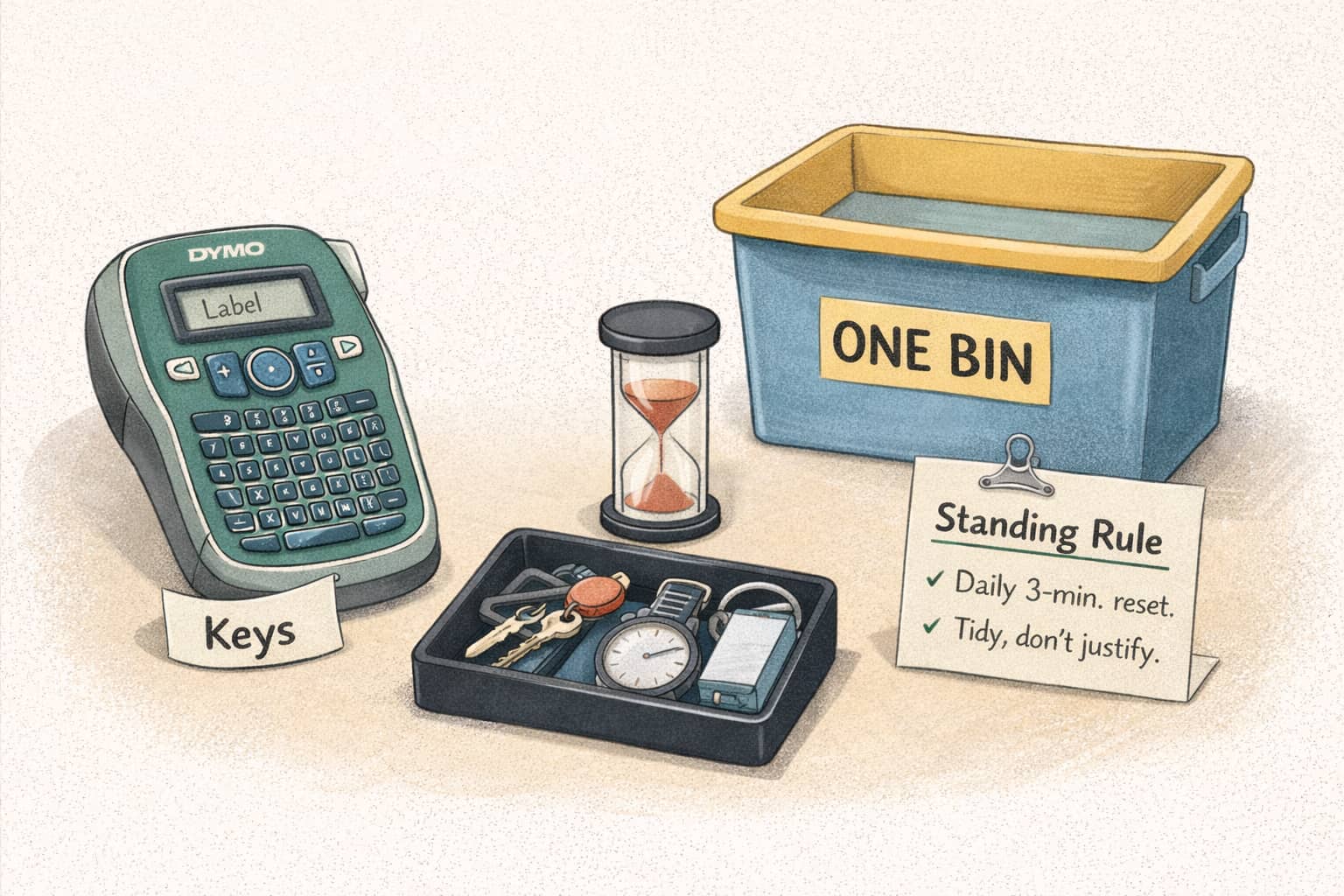
Define a boundary (tray, basket, tape line, label)
Covered surface (decision fatigue)
Active-use rule: only current task stays out
Overflow (capacity denial)
Fix container size: one shelf, one bin, one rail
Duplicates (fear of inconvenience)
Cap quantity: “two is backup, three is noise”
Restarts (motivation-based)
Standing rule: daily 3-minute reset, no heroics
Emotional clutter (uncontained exposure)
Delay box: a safe “not today” container with a date
Illustration: simple toolkit of rules (labels, timer, tray, one-bin limit) in a calm, cartoon-ink style.
Build rules that survive low-energy days. Your future self will call it “mysterious competence.”
ClutterLogic.com | Check Us Out On Medium