A performance analysis of deferred decisions
The Cognitive Cost of
“I’ll Deal With It Later”
It’s not a delay.
It’s a background process.
Every postponed decision remains active until resolved.
- Small deferrals are common.
- Cumulative load is rarely calculated.
- Mental “RAM” is an intuitive metaphor.
- Escalation feels personal because it is mechanical.
What Is an Open Loop?
An open loop is:
- An unfinished task
- An undecided object
- An unprocessed item
- A pending choice
Processing required: minimal.

System Impact: Negligible
The brain registers it. Then releases it.
- Brief awareness
- No persistent monitoring
- Easily contained
Retention baseline established.
Mental RAM
5%
Background Monitoring Begins
- Micro-scanning increases
- Surface identity blurs
- “I should” language appears
No moral framing. Just load.
Mental RAM
22%
Cognitive Fragmentation
- Visual interruptions increase
- Task switching accelerates
- Mental tab switching becomes default
Nothing urgent. Everything present.
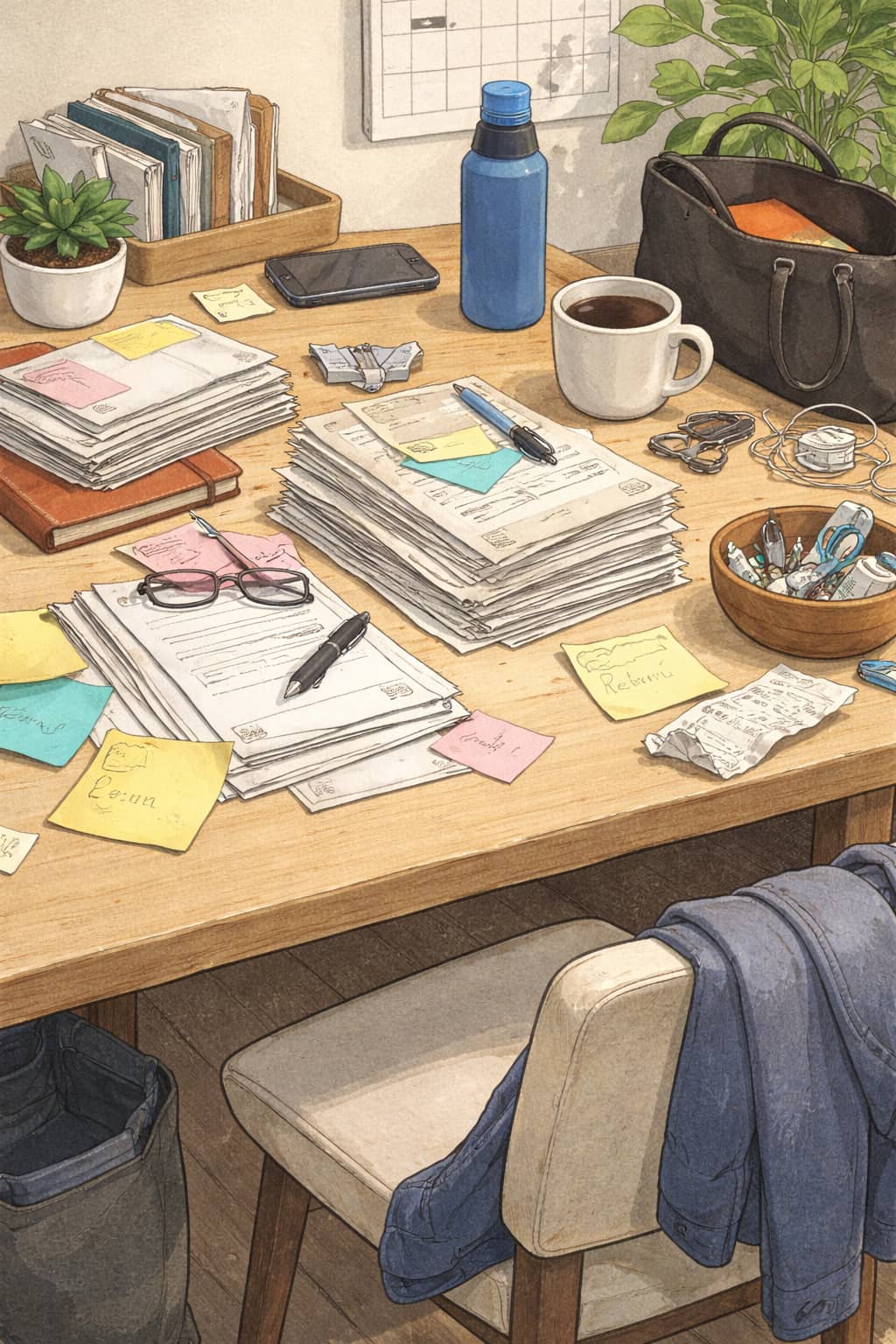
Mental RAM
47%
Passive Guilt Ecosystem
- Background stress stabilizes at an elevated baseline
- Decision avoidance compounds
- Storage bins are introduced as a containment strategy
Containment ≠ resolution.
Mental RAM
72%
Identity Shift Detected
- Self-description changes (“I’m overwhelmed”)
- Energy is misattributed to personality
- Additional productivity systems are purchased
The system is not broken.
It is busy.
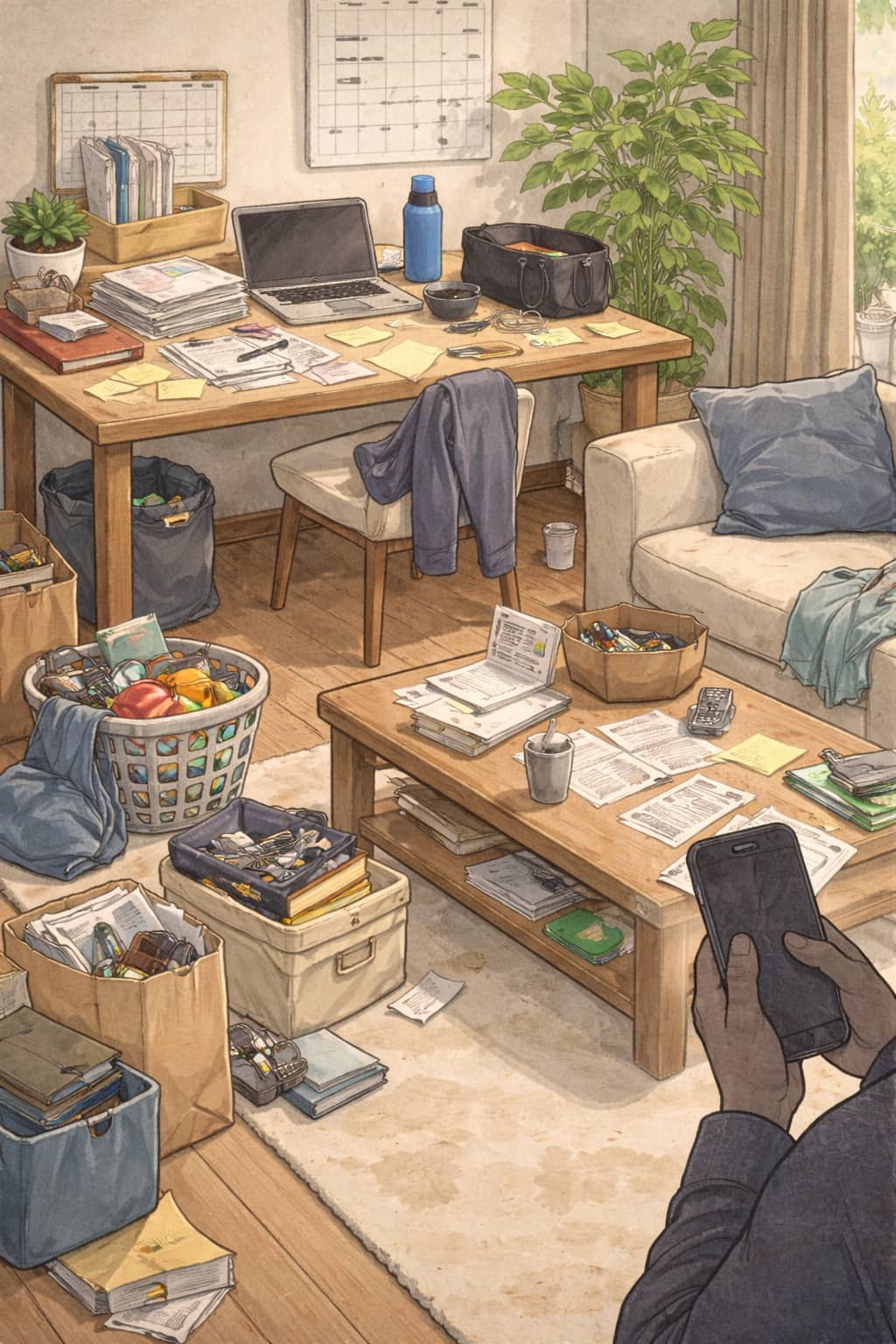
Mental RAM
89%
Deferred Decisions Accrue Cognitive Interest
Deferred Item
×
Time
×
Visibility
=
Processing Cost
- Visibility increases monitoring
- Duration increases attachment
- Quantity increases scanning
Dry. Mathematical. Consistent.
Why Storage Products Sell
Organization tools reduce visual noise. They do not close loops.
This is observation, not criticism.
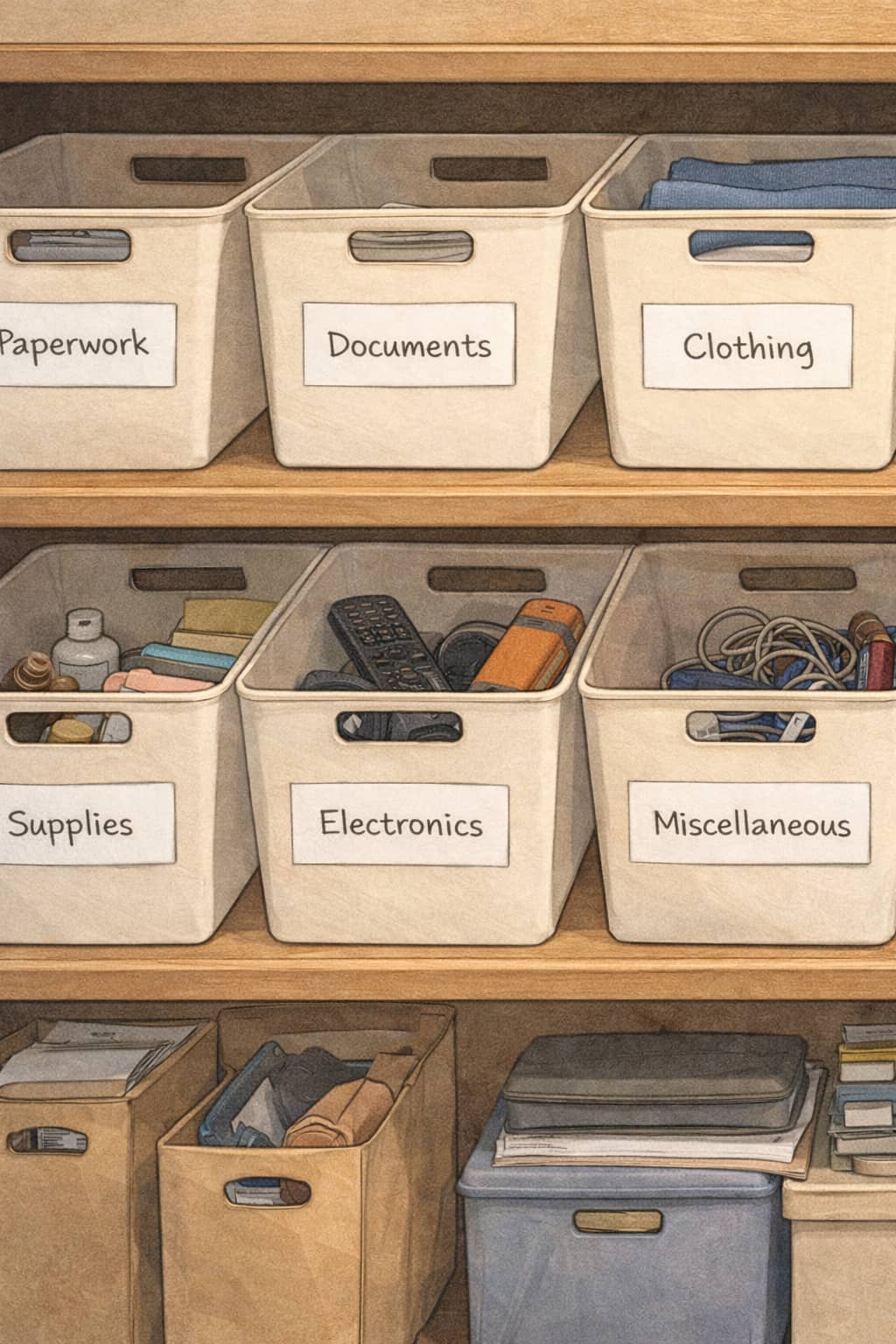
Closing Loops Restores Capacity
- Decide immediately when possible
- Assign a physical home
- Remove visibility of pending items
- Limit surface categories
- Eliminate fictional “later”

Mental RAM
12%
Micro-Twist
You were not overwhelmed.
You were running too many tabs.
Later is not a time.
It is a storage location.