If your house feels cluttered… it might not be about “too much stuff.”

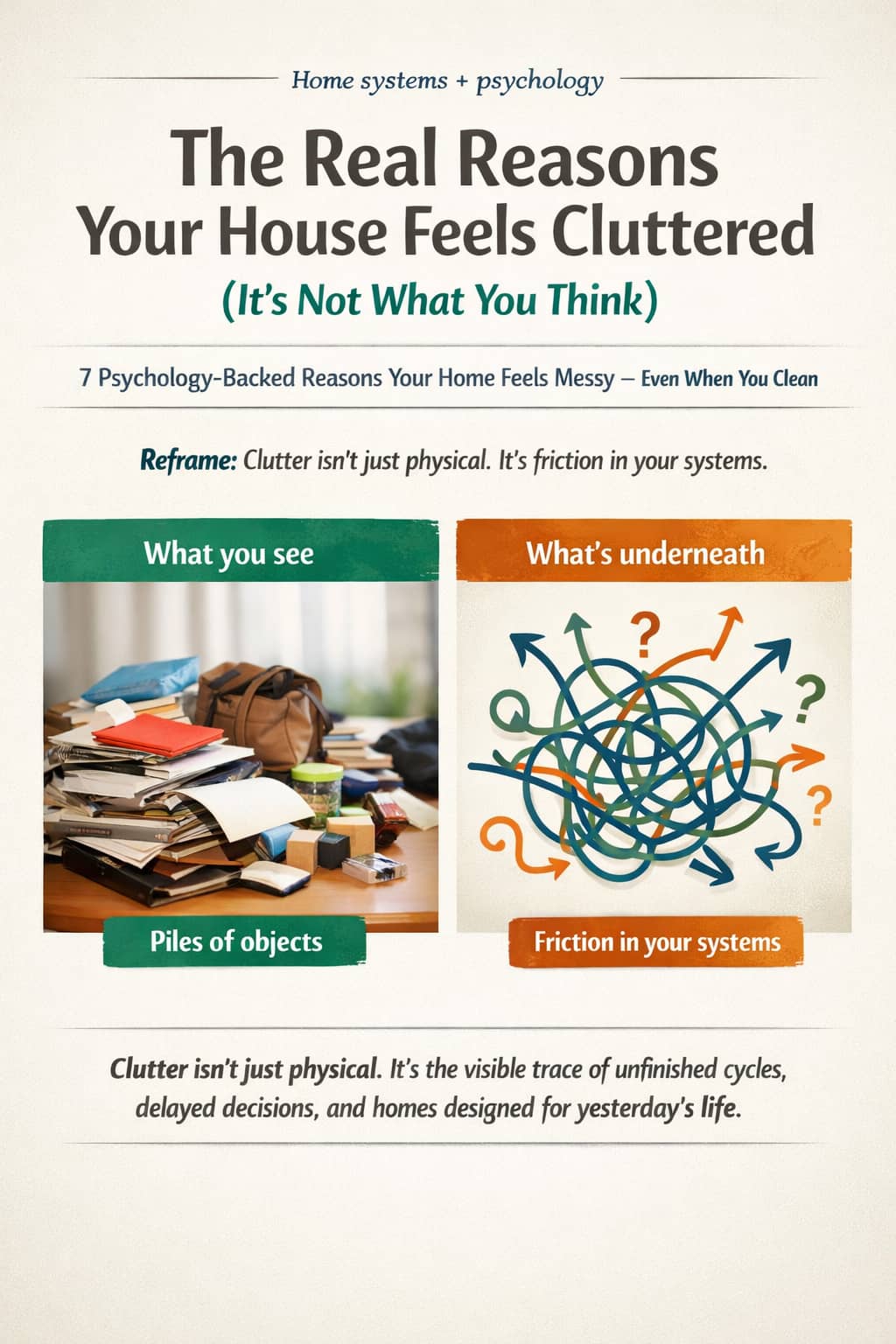
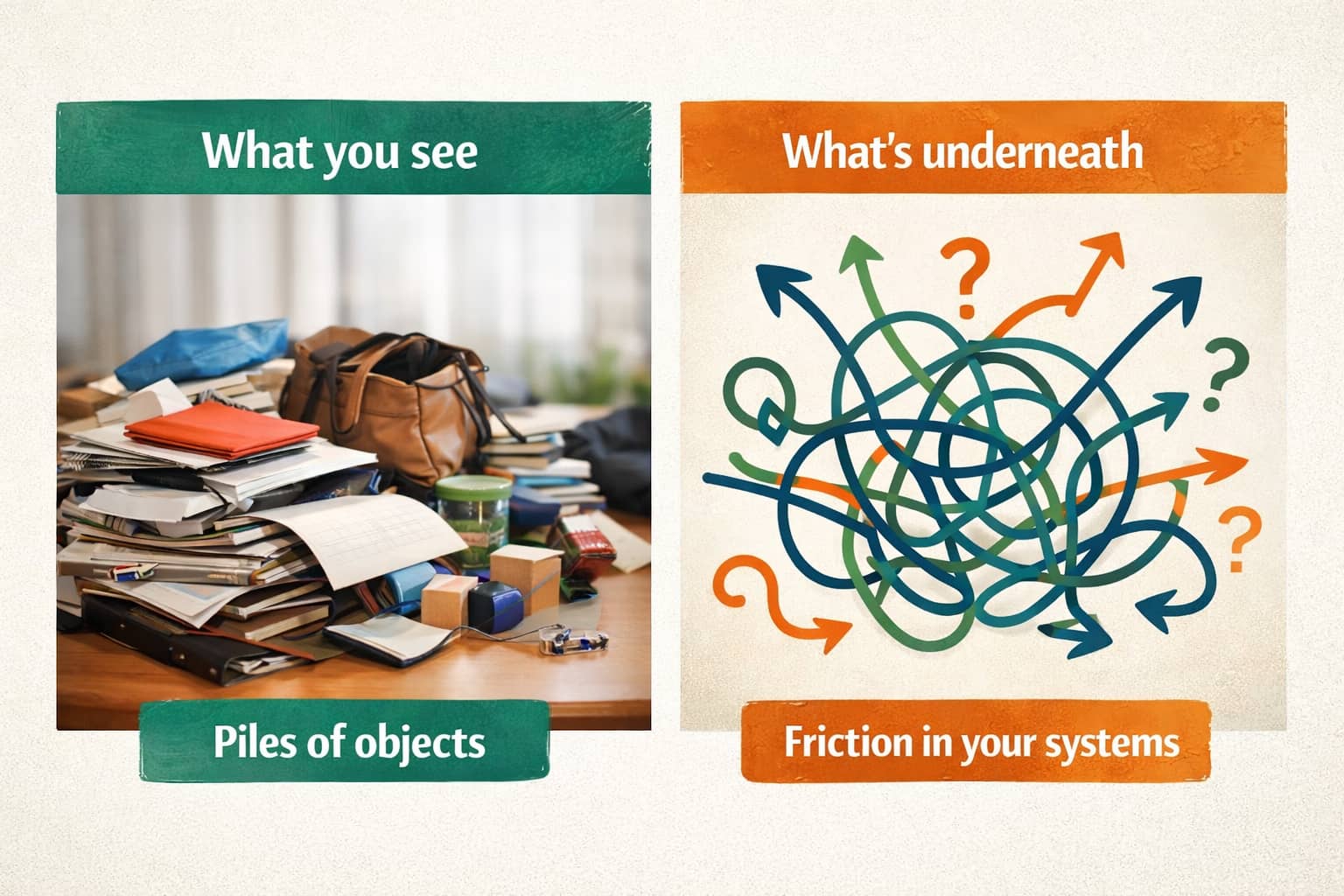
A small pile of everyday items gathered on a table: papers, bags, and mixed objects.
What you see Piles of objects
An illustration of tangled arrows and branching paths, suggesting confusing systems and unfinished loops.
What’s underneath Friction in your systems

Clutter isn’t just physical. It’s the visible trace of unfinished cycles, delayed decisions, and homes designed for yesterday’s life.

The 7 Real Reasons Your Home Feels Messy

Each reason includes a recognizable pattern, what’s actually happening, and one small shift that lowers the friction.

  1. 1) You Don’t Finish Cycles

    What it looks like

    • Laundry always “almost” done.
    • Mail sorted but not filed.
    • Groceries put away — except the bags.

    What’s actually happening

    Open loops create visual residue. Your brain flags unfinished tasks as “active.”

    Reframe signal

    Design “completion rituals,” not cleaning sessions.

  2. 2) You’re Storing Decisions, Not Objects

    What it looks like

    • Stacks labeled “deal with later.”
    • Boxes you haven’t opened in years.

    What’s actually happening

    Avoided decisions become stored clutter. Every item equals postponed cognitive effort.

    Reframe signal

    Clutter shrinks when decisions accelerate.

  3. 3) Your Space Is Designed for Your Old Life

    What it looks like

    • Baby gear in a house with teenagers.
    • Work-from-home setup in a dining room.
    • Hobby supplies for hobbies you quit.

    What’s actually happening

    Your environment reflects past identity — not current behavior.

    Reframe signal

    Design your home for who you are now.

  4. 4) You Have No Exit System

    What it looks like

    • Donation piles that never leave.
    • Sell boxes that sit for months.

    What’s actually happening

    Most homes have intake systems — not output systems.

    Reframe signal

    Create a permanent “outbox” for your home.

  5. 5) Storage Is Giving You Permission to Accumulate

    What it looks like

    • Bins inside bins.
    • Closet organizers inside overstuffed closets.

    What’s actually happening

    Storage expands to justify volume.

    Reframe signal

    Reduce before you reorganize.

  6. 6) Your Home Has Too Many “Drop Zones”

    What it looks like

    • Keys here. Mail there. Shoes everywhere.

    What’s actually happening

    When everything is allowed everywhere, nothing has a home.

    Reframe signal

    Fewer drop zones equals less visual noise.

  7. 7) You’re Cleaning — Not Reducing

    What it looks like

    • Everything looks neat… for 48 hours.

    What’s actually happening

    You’re rearranging volume, not shrinking it.

    Reframe signal

    Decluttering changes capacity. Cleaning changes appearance.

Clutter Is a System Failure — Not a Personal Failure

The pattern underneath

  • Open loops
  • Delayed decisions
  • Identity mismatch
  • No exit path
  • Storage inflation
  • Diffuse placement
  • Volume without reduction

When you fix the system, the clutter stops fighting back.

Start with one “completion ritual” or one permanent outbox — and let the room stay easier.