Small-space psychology • decluttering without shame
Why Decluttering Fails in Small Spaces (And Why It’s Not Your Fault)
Core promise:
“If this hasn’t worked for you before, it’s because the advice wasn’t built for your space—not because you failed.”
The guilt hook
Not a willpower problem
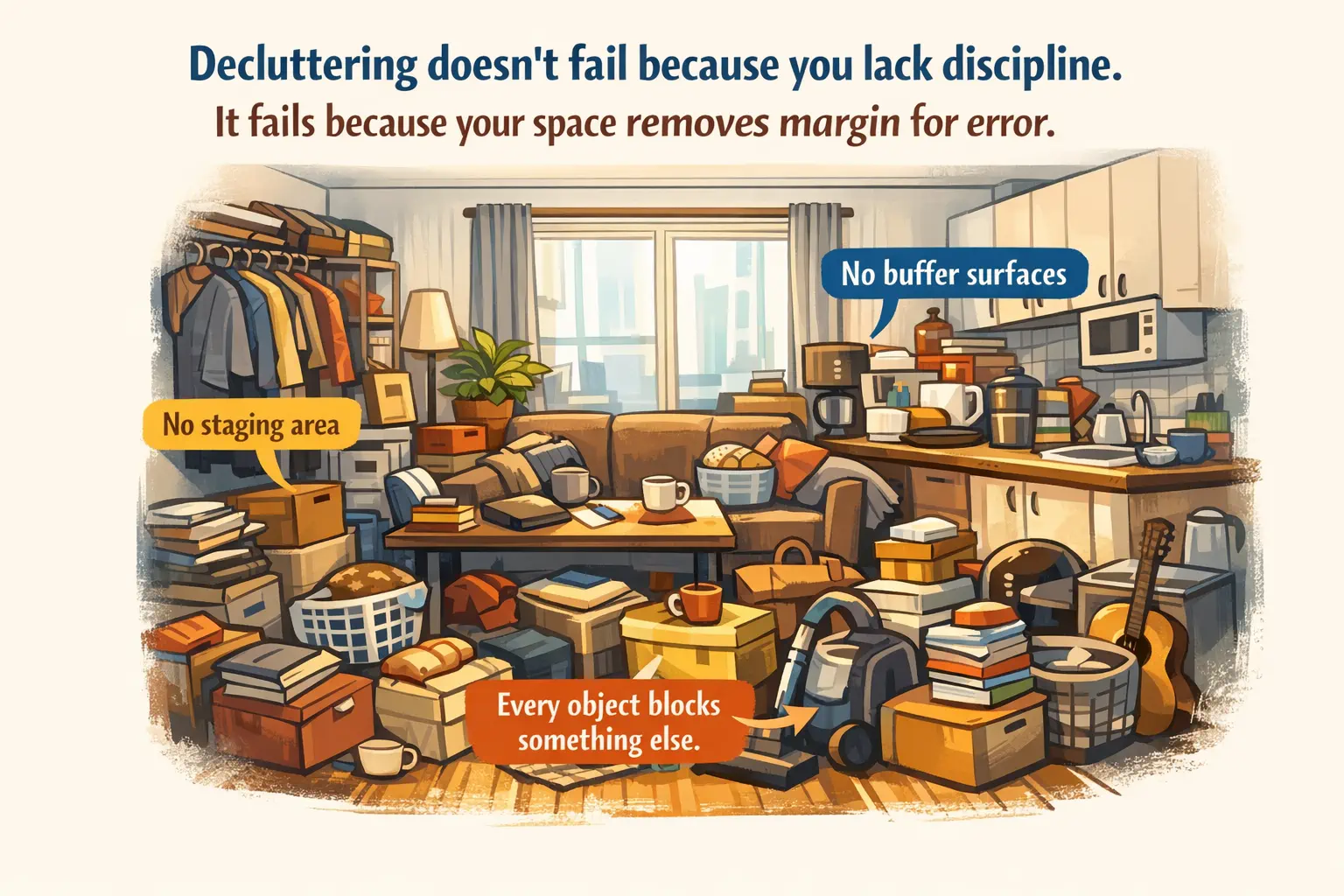
The story flips instantly: from “I’m bad at this” → “this method wasn’t designed for my constraints.”
Why most decluttering advice assumes a bigger home
Space = hidden resource
“Just make piles”
Small spaces can’t absorb temporary chaos. Piles don’t “sit there” — they become walls.
“Start anywhere”
In tight spaces, every decision affects three others. Moving one thing often creates two new problems.
“Clear the surfaces first”
Looks like progress. Creates relapse. When the “home” isn’t defined, surfaces refill like a magnet.
Advice designed for excess space creates overload when space is tight.
 Structure beats effort.
What’s actually stopping you: decision fatigue, not motivation
Too many micro-decisions
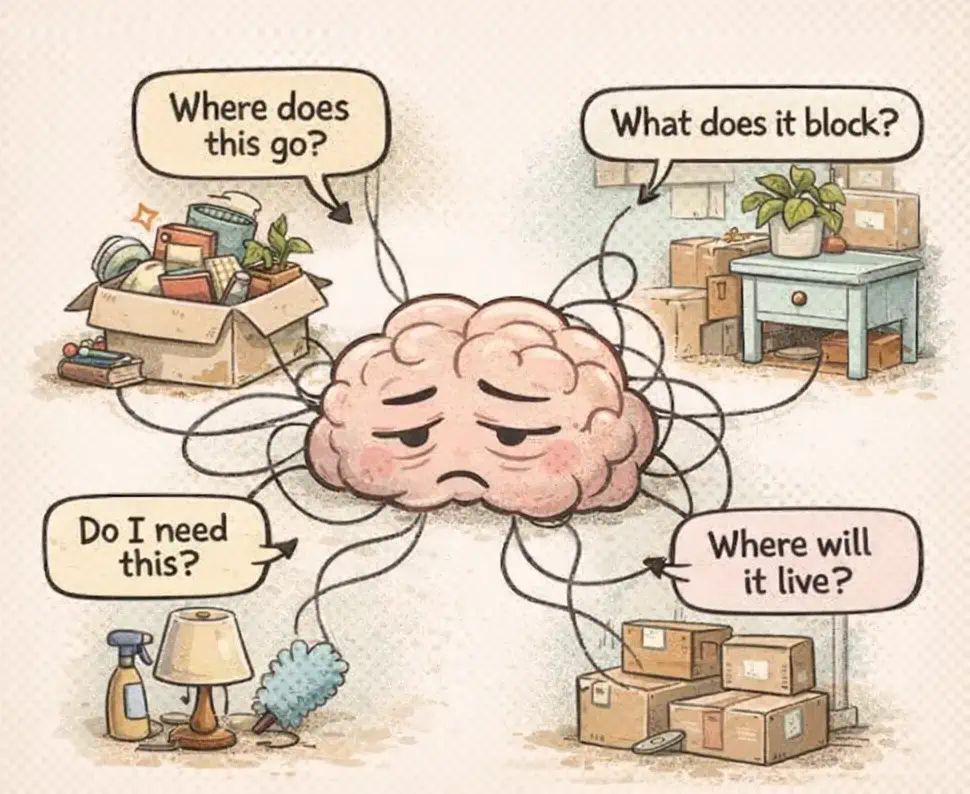
In small spaces, objects don’t just exist.
They compete.
More items = more work.
More interference = more work.
not “lazy”
too many decisions
too little margin
Small spaces don’t suffer from “too much stuff” — they suffer from interference
Same items • different impact
Large room
items spaced • calm
visible
reachable
low friction
Small room
overlap • blocking
blocks access
reduces visibility
raises effort per action
An item can be useful and still be disruptive.
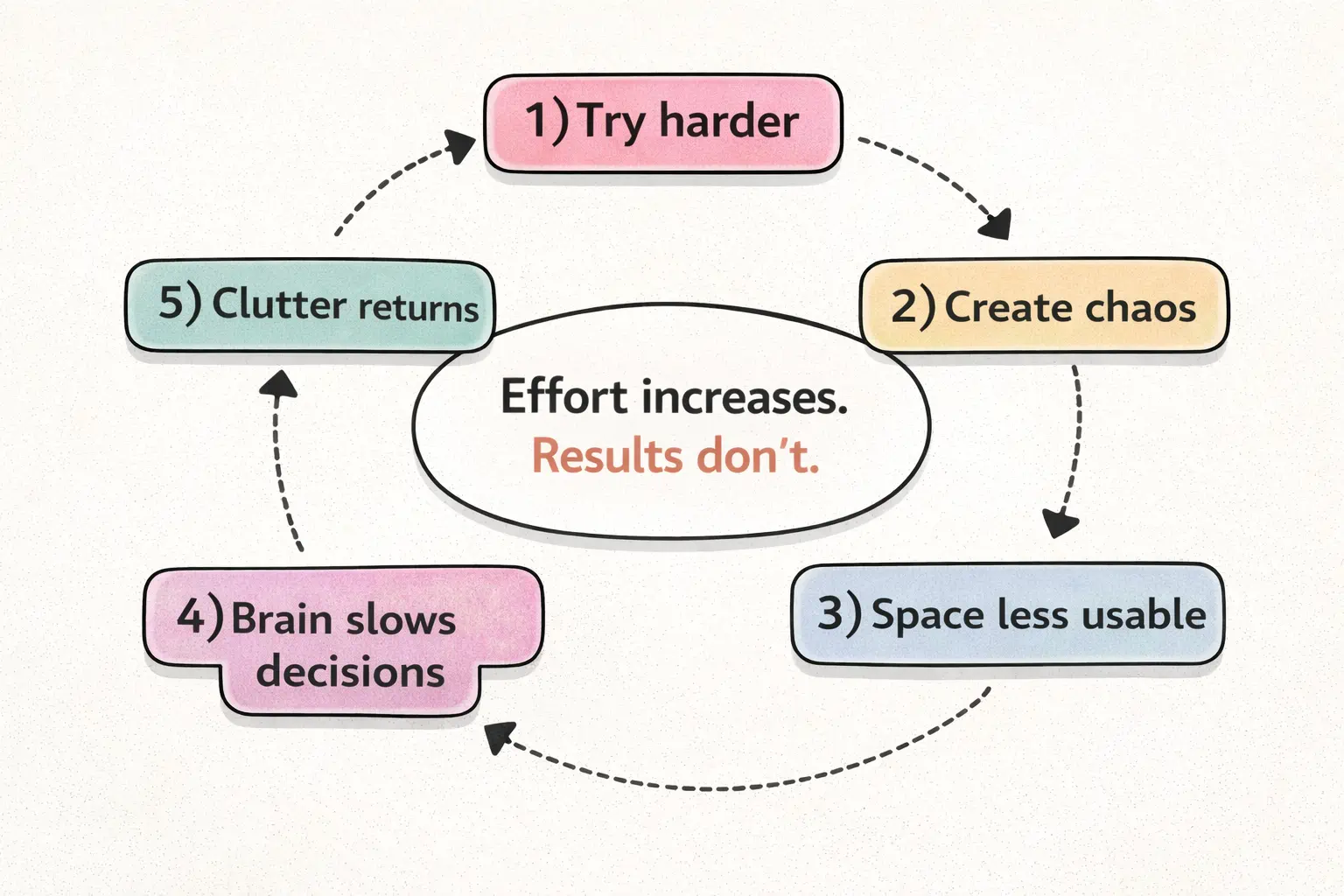
Why motivation-based decluttering backfires
The failure cycle
What small spaces actually need
Three structural shifts
1 — Constraints before choices
Decide how much space a category gets before touching anything. The boundary does the heavy lifting.
2 — Containment over sorting
The container becomes the decision-maker. If it doesn’t fit, it’s a “not now / not here.”
3 — Interference-based decisions
Ask the killer question: “Does this block something else?” Useful-but-disruptive items are the real culprits.
When space is tight, clarity comes from limits — not willpower.
Once the system is right, progress stops feeling fragile and starts feeling inevitable.