NOT MINIMALISM • THRESHOLD EXPERIMENT

What Actually Happens When You Remove 50% of Your Child’s Toys

A behavioral shift most parents never see — because they never remove enough.

Less ideology more “try it & see” Behavior over décor Threshold over “a little”

The 3 Things Parents Worry About

SECTION 1 • THE FEAR

“They’ll miss something.”

Translation: What if I remove the one toy that matters?

“Play will suffer.”

Translation: What if boredom turns into chaos?

“I’ll have to buy replacements.”

Translation: This becomes an expensive mistake.

This infographic starts with fear because fear is the real gatekeeper. Then it runs one question: “What changes when volume crosses a threshold?”

Why Removing 10% Changes Nothing

SECTION 2 • THRESHOLD
100 → 90 toys looks… basically the same

Behavior stays sticky because the room still feels “infinite.” Cleanup still looks endless.

100 → 50 toys visually dramatic

New friction appears (in a good way): fewer choices, fewer piles, more “finishable” play.

Key idea: Behavior doesn’t change until volume crosses a friction threshold. Small cuts are symbolic. Big cuts are structural.

The Before / After Behavior Delta

SECTION 3 • WHAT SHIFTS

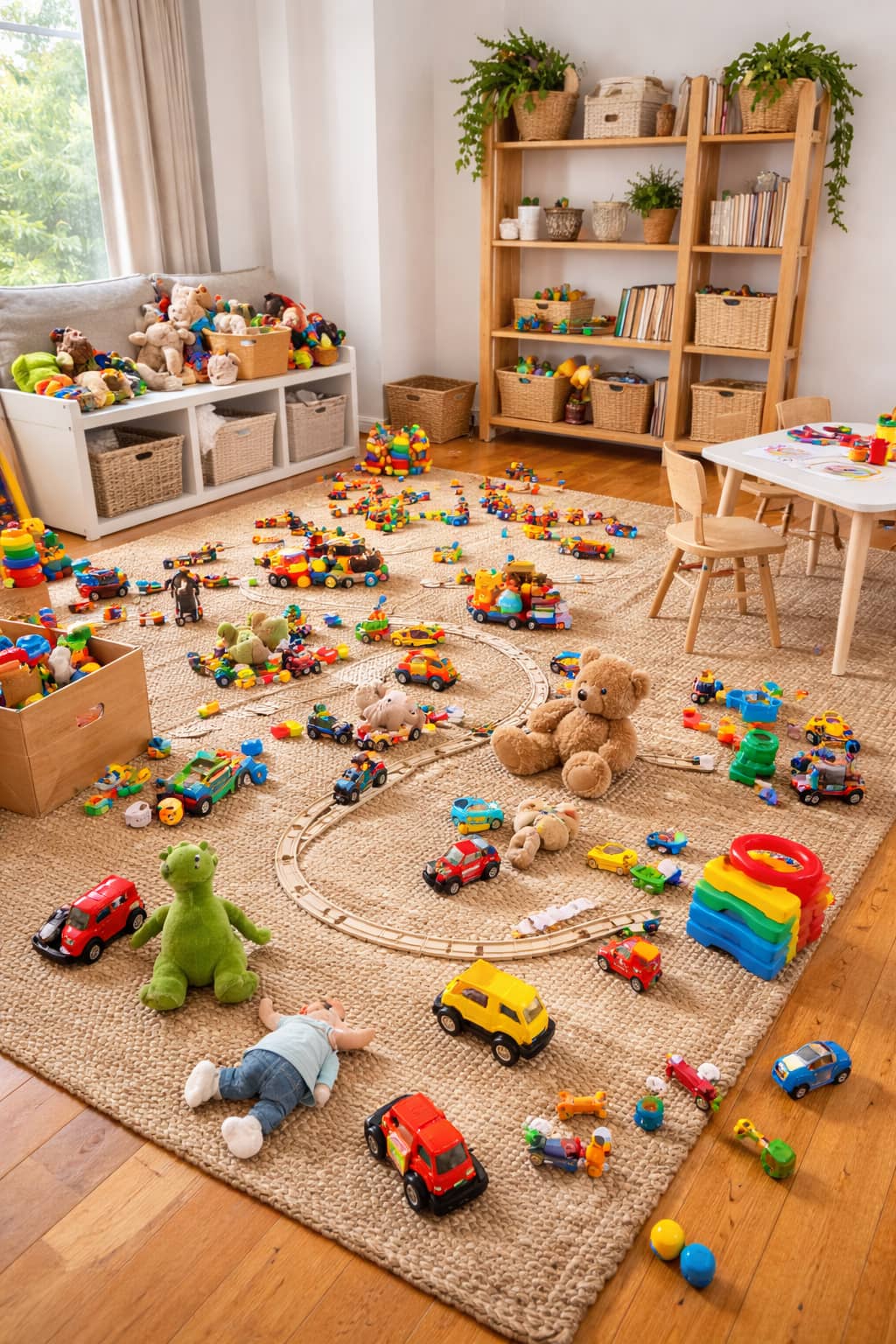
BEFORE: Excess Volume

high friction
Cluttered play area with toys scattered
Cleanup feels endless (so it’s delayed… then worse).
Fast toy-hopping: short bursts, quick abandonment.
Multiple unfinished “starts” create more mess than play.
Transitions (bedtime, leaving) become negotiation zones.
Parent energy drains before the routine even begins.

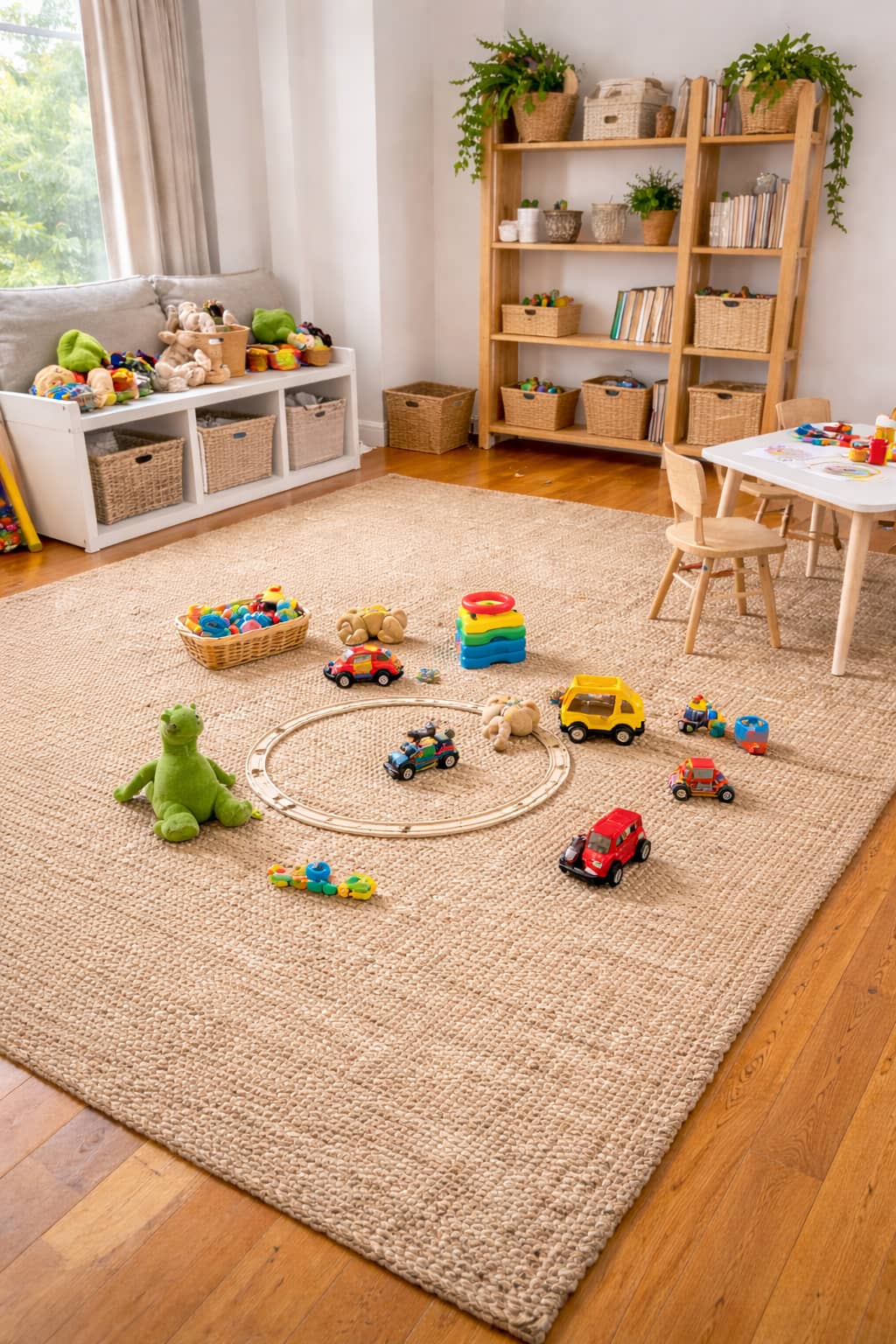
AFTER: 50% + Containment

lower friction
Neat toy bins with visible space and fewer categories
Cleanup becomes finite (your brain can see the finish line).
Play sessions last longer because focus has room to land.
More creative combining: fewer pieces → more imagination glue.
Fewer bedtime battles because the day has less “drag.”
Parent energy stays available for the hard parts.
Observed behavioral patterns (not hard data): common shifts reported when toy volume drops enough to change the system.

The Psychology Behind the Shift

SECTION 4 • WHY IT WORKS

Reduced Visual Noise

Less stimulus → longer focus. The room stops “shouting” options.

Fewer Micro-Decisions

Less choice → less overwhelm. Starting play becomes easier than browsing.

Finite Cleanup

Task completion becomes achievable. “We can finish” replaces “ugh.”

System Feedback Loop

Containment enforces balance automatically: full bins = pause before adding more.

The Threshold Rule

SECTION 5 • THE LINE

The 50% Rule
If you don’t see behavior change,
you didn’t remove enough.

Decluttering fails when reduction is symbolic instead of structural.

Small cuts don’t produce feedback.
Large enough cuts do.
— the “systems” version of parenting

Try This for 14 Days

MINI EXPERIMENT
1Remove half and store it out of sight (not “in the closet they can see”).
2Contain what remains in a fixed space: bins, shelves, or one zone.
3Observe play + cleanup like a scientist (no lectures, just notes).
4Only return toys that are requested repeatedly (not once, not loudly, repeatedly).
Simple illustration of a storage box or toy rotation concept
A calm trick: the “out of sight” bin turns toy return into a request-based filter.
You’re not proving a philosophy. You’re running a household test: Does volume reduction change the system?

Why This Gets Shared

BONUS • “THIS IS ME” ENERGY

Pinterest

search-driven

Clear headline + before/after panels = saves, boards, re-pins.

Parenting Blogs

embed-friendly

Explains a mechanism, not a vibe. Easy to cite and discuss.

LinkedIn

systems frame

“Household systems design” hits productivity brains surprisingly hard.

Reddit / X

provocative

“Is 50% too extreme?” sparks debate—and debate spreads screenshots.


ClutterLogic.com | Check Us Out On Medium