Not-About-Stuff Clutter
psychological clutter
decision fatigue
minimalism mindset
clutter stress
The 5 Types of Clutter That Aren’t About Stuff
Why Your Home Feels Heavy (Even When It’s “Organized”)
Most clutter isn’t physical.
It’s unresolved identity, decisions, and time.
It’s unresolved identity, decisions, and time.
If your home feels heavy, you’re probably dealing with one of these.
TYPE 1
Duplicate Clutter
“Category Failure”
choice fatigue
Diagnosis
You don’t own too many items. You never collapsed the category.
Examples
- 12 mugs
- 5 black jackets
- Backup phone chargers in every room
- 3 sets of workout gear “just in case”
Hidden cost
Micro-decisions, choice fatigue, and subconscious evaluation every time you open a drawer.
Collapse rule
Decide the rule once. The extras disappear automatically.
Duplicates aren’t abundance. They’re postponed decisions.
Shareable quote
Category collapse in action
Before → After
BEFORE: 8 mugs + decision arrows
AFTER: 3 mugs + zero debate
Rule example: 3 mugs per person
TYPE 2
Backup Identity Clutter
“Future You Storage”
identity pressure
Diagnosis
Items that represent who you might become someday.
Examples
- Clothes for a body you don’t have
- Books for a career you didn’t pursue
- Craft supplies for a hobby you don’t practice
- Business tools for a side hustle you never started
Hidden cost
Identity pressure, subtle guilt, and emotional drag.
Collapse rule
If it represents a future self, it doesn’t get to live with the present one.
You’re not decluttering. You’re closing unfinished identities.
Shareable quote
Future You holding the pressure
Image • 1:1
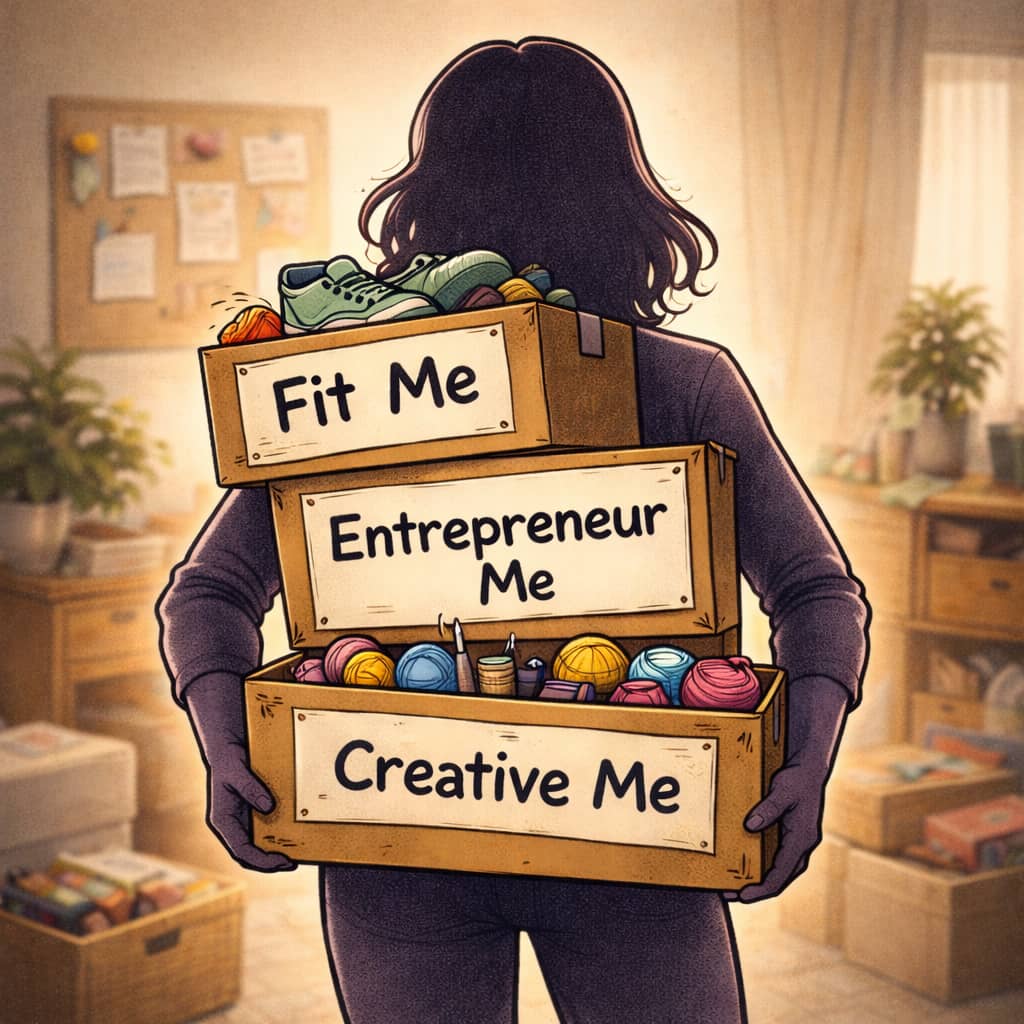
Boxes that whisper “not yet” can weigh more than boxes that are simply heavy.
TYPE 3
Someday Clutter
“Time Illusion Storage”
time guilt
Diagnosis
Objects waiting for a version of your schedule that doesn’t exist.
Examples
- Projects waiting for time
- Equipment waiting for motivation
- Clothes waiting for events
- Decor waiting for the right season
Hidden cost
Cognitive congestion, visual reminders of unfinished life, and “time guilt.”
Collapse rule
Now or not now. If it mattered, it would already be active.
Someday clutter is unpaid rent for a future that never moved in.
Shareable quote
Time audit: active vs waiting
NOW / SOMEDAY
NOW (Used)
- Tools you reach for weekly
- Projects with a next step
- Clothes you wear this month
- Hobbies on your calendar
SOMEDAY (Dust collecting)
- “When life slows down…”
- “When I get motivated…”
- “For that special event…”
- “For the right season…”
TYPE 4
Storage-Dependent Clutter
“System-Supported Stuff”
maintenance cycles
Diagnosis
Items that require containers, labels, or elaborate systems just to survive.
Examples
- Seasonal bins
- Specialized organizers
- Rotating wardrobes
- Decorative storage furniture
Hidden cost
Maintenance cycles, reset days, and constant micro-management.
Collapse rule
If it needs a system to justify existing, the system isn’t the problem.
Storage isn’t solving clutter. It’s extending negotiations.
Shareable quote
The “support stack” it demands
Chain reaction
If the chain is longer than the item’s actual usefulness, it’s not “organized” — it’s managed.
TYPE 5
Emotional Ransom Clutter
“Memory Props”
fear of forgetting
Diagnosis
Objects you keep to avoid feeling like you’re losing the memory.
Examples
- Gifts from old relationships
- Childhood items
- Trophies
- Random sentimental objects
Hidden cost
Fear of forgetting, emotional hesitation, and resistance to change.
Collapse rule
Meaning is portable. Objects are not.
You’re not preserving memories. You’re storing fear of forgetting.
Shareable quote
Memory ≠ Object (they can separate)
Broken link
Memory
Object
Keep the story. Keep a photo. Keep a note. The item doesn’t have to be the vault.
Which One Is Running Your Home?
Quick self-check — mark the pattern you keep bumping into.
Duplicate Clutter
Backup Identity Clutter
Someday Clutter
Storage-Dependent Clutter
Emotional Ransom Clutter
Most homes don’t have a clutter problem.
They have a decision framework problem.
They have a decision framework problem.